
Low maintenance gardens in Tewkesbury, where low-lying ground near the Severn and Avon means drainage, permeable surfaces and resilient planting matter as much as appearance. Free quotes offered.
Tewkesbury stands where the Severn and Avon meet, and the town has older streets around its abbey as well as low-lying areas close to the rivers. Many gardens here have to cope with wet winters, rising groundwater and, in some places, the occasional flood. Older properties near the abbey sit a little higher, while newer pockets closer to the water feel the damp far more, so conditions differ from street to street.
That changes what low maintenance means. A garden that needs little work in a dry year but turns into a mess after the next wet spell is not really easy care at all. We focus on drainage, hard-wearing surfaces and plants that recover well, and we are open about what any garden can and cannot withstand. Quotations are free, and visits are straightforward.
We begin by finding out how your garden behaves after heavy rain: where water gathers, how long it lingers and whether any previous work has altered the falls. Permeable paving, gravel over a free-draining base and carefully shaped ground let surface water soak away or move on. Where a house sits low, we avoid creating bowls that trap water near the walls. Raised beds and a slightly raised terrace can give you dry areas to use even in a wet January. If your property has flooded before, tell us, as that influences every choice.
Choose materials that tolerate being wet. Porcelain and stone paving cope well, though textured finishes are safer when damp. Gravel is forgiving and easily raked back after water movement. Artificial grass can be a sensible answer to a lawn that turns to mud, as long as the base beneath drains properly. Plants that recover from waterlogging include dogwood, iris, astilbe, willow-leaved shrubs, rushes and many grasses. Hardy perennials cut back and recover quickly. Avoid anything that needs perfect drainage, since it will fail the first wet winter. Edging keeps gravel from washing out.
After any flood or heavy rain, check the garden. Sweep silt and debris from paving and gravel, clear drains and open channels, and look for plants that have been flattened or buried. Moss and algae are common on shaded surfaces, so schedule a wash once or twice a year. Mulch borders in spring, and cut back growth in late winter. Gravel may need redistributing. These tasks are small compared with rebuilding a lawn or replacing a failed patio, which is why the design matters. Keep a note of any recurring damp patches, because they show where drainage could improve.
We cover Tewkesbury and the surrounding area, including Upton upon Severn, Bishop's Cleeve, Cheltenham and Gloucester. Older streets near the abbey have restricted access, so we plan deliveries and waste removal with care. Gardens near the rivers may be accessible only along narrow routes or across uneven ground, and in wet weather conditions can change quickly. We visit, discuss your priorities, check how water moves and supply a written quote without charge. Where the ground is low, we ask neighbours' experiences of past floods only if you are happy to share, and we always check levels in person. A short chat about how the garden behaved in the last wet winter is one of the most useful things you can give us.
We also take on low maintenance gardens work in nearby Upton upon Severn, Bishop's Cleeve, Cheltenham, Gloucester.
Select a service to read our guide to it:

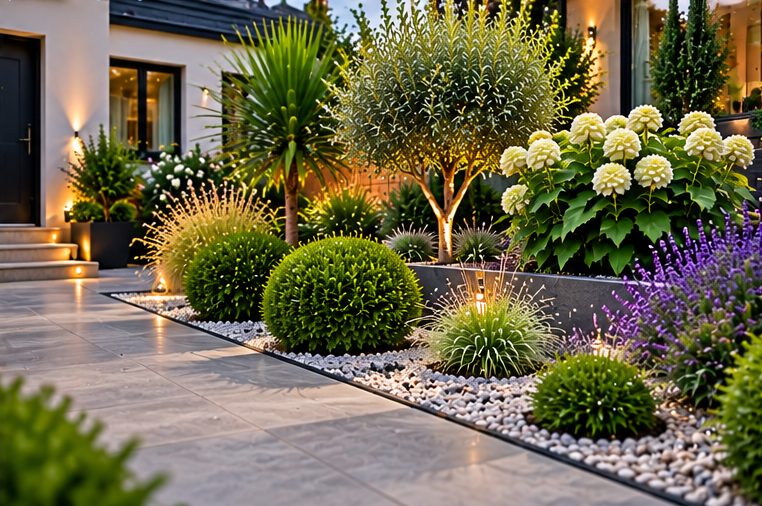
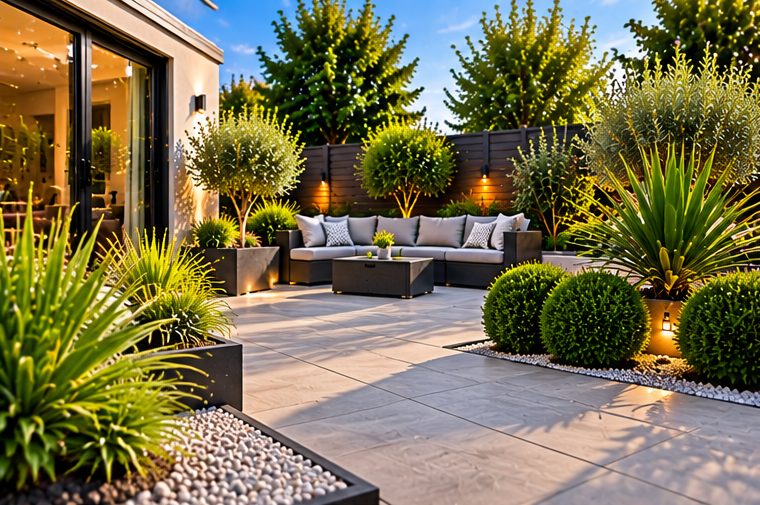
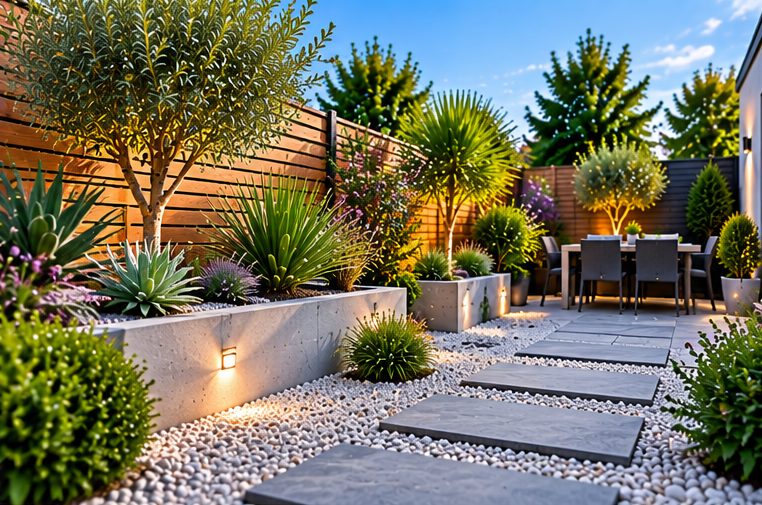
Images on this page are illustrations only.
“Jim and Dan did a brilliant job on my 90ft conifer. Its a lot safer now and I have more light in the garden...”
“The boys did an excellent job... pruned my trees back and remove one tree that had split...”
“The guys were prompt & proffesional removed an old ash for me thanks guys”
It can be easier to manage, but nobody can promise it will be unaffected by a flood. Permeable surfaces, resilient plants and good drainage reduce the damage and the clean-up. We are honest about what is realistic on your plot. We would talk through the risks.
It is paving that lets water pass through joints or the material itself into a free-draining base below, instead of running off. It reduces puddling and runoff and is often sensible for drives and patios in wet areas. Ask about options.
Sometimes a slightly raised terrace helps keep seating areas dry, but it must be designed so water does not pool against the house. We look at levels and falls on site before recommending any change. It is not always needed, so ask us to look at your garden first.
SPR Trees & Landscapes, 6 Rose Avenue, Worcester, WR4 9PY
Tell us what you need in Tewkesbury and we will get back to you, usually the same day.
Prefer to talk? Call 07542 451291 or WhatsApp us.