
SPR Trees and Landscapes builds and mends garden brickwork across Worcester, including boundary walls, retaining walls, steps and raised beds, with careful attention to foundations, drainage and how new work blends in.
Brick in a garden has to cope with frost, wet ground and plenty of weight, so how it is built matters more than how it looks on day one. Solid footings, the right mortar mix, sensible movement joints and a plan for water behind the wall are what keep it standing. We build and repair garden brickwork in Worcester and the villages around, from a low planter to a full boundary.
Plenty of Worcester homes are Victorian, Edwardian or interwar, with old lime-rich mortar and bricks that have weathered to a particular colour. Newer estates tend to have machine-made brick and tighter plots. Either way, we start by looking at what is already there, then talk through the options, the likely disruption and what needs a planning or building regulation check before work begins.
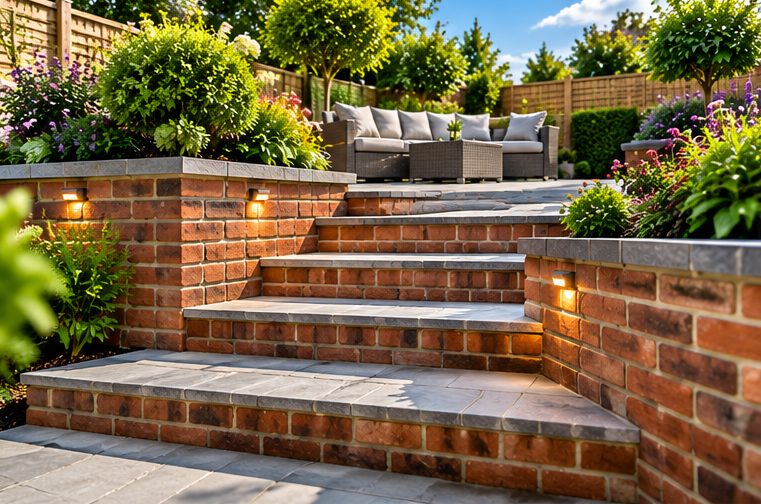
A boundary wall is long, exposed and often shared with a neighbour, so it needs thought before the first brick goes down. Height, thickness, piers and coping all affect strength, and the footing must go deep enough for the ground it sits on. In parts of Worcester close to the Severn the soil can be wet and heavy, which pushes us towards wider foundations and good drainage at the base. We will also point out when a taller wall might need permission, and when a party wall conversation with next door is the sensible first step.
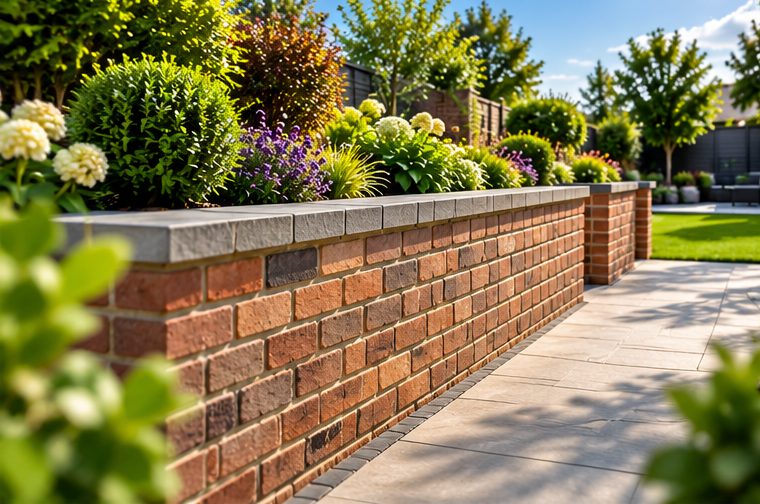
Anything holding back soil has to resist a lot more force than a free standing wall. Level changes in gardens, sloping plots and sunken patios call for reinforced footings, drainage pipe behind the wall and weep holes so water cannot build up. The same thinking applies to steps, where consistent risers and a firm base keep them safe in frost. Raised beds and planters are gentler jobs, but the brick still needs a damp proof detail where soil meets masonry. Taller retaining walls can need an engineer, and we say so early rather than later.
Not every wall needs rebuilding. Crumbling joints can often be raked out and repointed, loose copings re-bedded and individual bricks cut out and replaced. Matching is the tricky part: colour, size, texture and the mortar finish all vary, and a poor match shows for years. For older walls we avoid hard cement mixes that trap moisture and can damage soft bricks. If a wall leans, bulges or has a long diagonal crack, we look at the cause before offering to repair it, because rebuilding may be the only lasting answer.
Garden wall construction starts with the footing, then rises through carefully laid courses to piers and coping. Brick garden walls can divide a plot, screen a patio or set off a lawn, while garden boundary walls need extra thought on height, thickness and neighbours. We talk through each choice with you before any digging.
Read the guide →Retaining wall construction is about holding back soil safely. Garden retaining walls need strong footings, drainage behind the face and often reinforcement. Brick retaining walls give a traditional finish, and we explain when a taller structure should have an engineer's input before anything is built.
Read the guide →Garden wall repairs begin with working out why the damage happened. Brickwork repairs may mean replacing spalled bricks, fixing cracks or re-bedding copings. Where a wall is leaning or bulging, garden wall rebuilding is sometimes the safer option, and we reuse sound bricks where we sensibly can.
Read the guide →Repointing garden walls renews failing mortar joints so water stops soaking into the brick. We rake out loose mortar to a proper depth, then fill with a mix that suits the age and softness of the wall, finishing the joint to match the look already there.
Read the guide →Garden steps construction needs even rises, a firm base and a surface that grips in wet weather. Brick garden steps can follow a slope neatly or sit inside a retaining wall. We measure the level change, think about handrails where useful, and keep the treads consistent.
Read the guide →Raised brick planters and brick flower beds add height and structure to a garden, and bring planting up to a comfortable level. We build them with proper footings, drainage at the base and a damp proof layer, so soil moisture does not stain or damage the brick over time.
Read the guide →Decorative garden brickwork covers features such as curved walls, patterned panels, inset details, brick edging and feature piers. Because the bond and mortar finish are visible, careful setting out is essential. We sketch ideas with you and advise what is realistic for your plot and budget.
Read the guide →Brick pillars and gate posts give a drive or side entrance a solid, lasting frame. They need deep footings and sometimes reinforcement to carry gate weight. We plan the opening width, hinge position and capping, and check the sums so the gate swings freely.
Read the guide →Select your town to see how we handle garden brickwork locally.
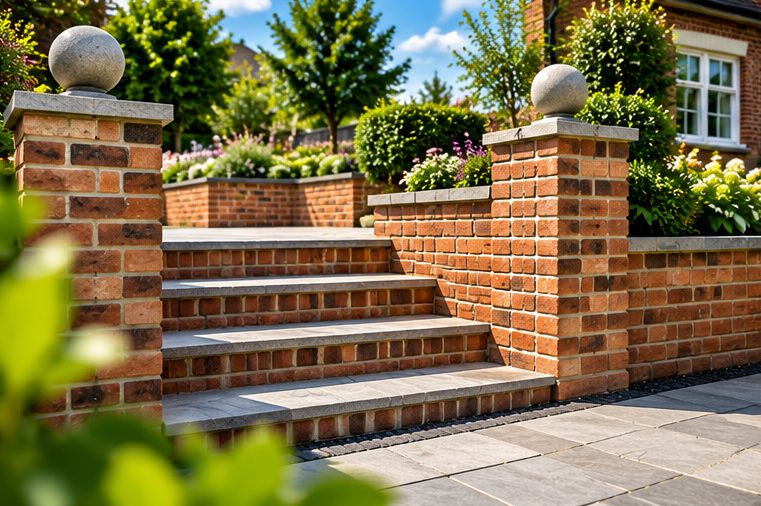
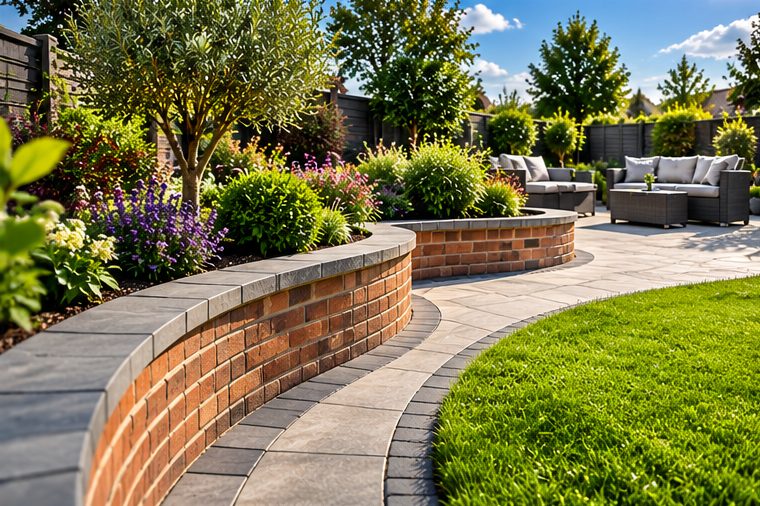
Images on this page are illustrations only.
“Jim and Dan did a brilliant job on my 90ft conifer. Its a lot safer now and I have more light in the garden...”
“The boys did an excellent job... pruned my trees back and remove one tree that had split...”
“The guys were prompt & proffesional removed an old ash for me thanks guys”
It depends on height, position and whether the property is listed or in a conservation area. A low wall often needs nothing, but a tall one beside a road may. We will point out likely checks, though the final answer comes from the council.
We can usually get close. Colour, size, texture and mortar all need to suit, and weathered old brick is harder to match than new. Reclaimed bricks sometimes help. We will show you options and be honest where a perfect match is unlikely.
Mainly through sound footings, strong construction and drainage behind the wall so water pressure cannot build up. Taller walls may need structural design. We explain what your site needs and recommend an engineer where it is the right call.
If the bricks are sound and the wall is straight, repointing is usually enough. If it leans, bulges, has deep cracks or crumbling bricks, rebuilding may be more reliable. We look at it on site and tell you plainly which applies.
SPR Trees & Landscapes, 6 Rose Avenue, Worcester, WR4 9PY
Tell us about your garden and what you would like done and we will be in touch, usually the same day.
Prefer to talk? Call 07542 451291 or WhatsApp us.