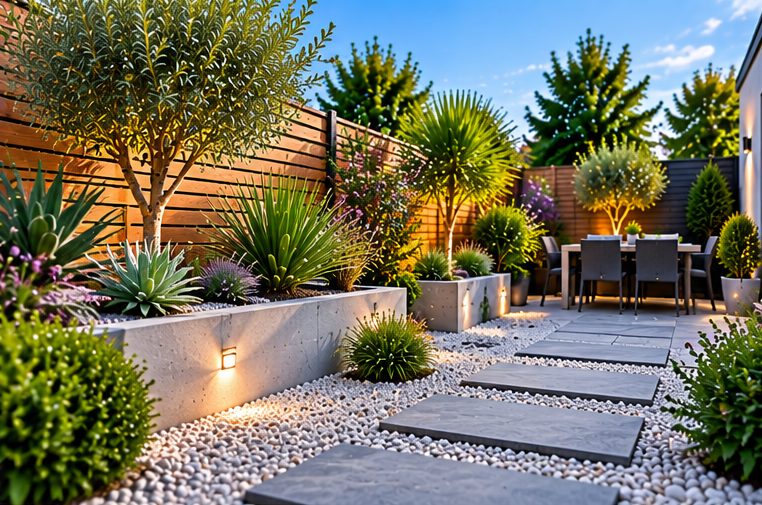
If mowing, weeding and watering have turned your garden into a chore, a hard-surfaced layout is a natural thought. Done well, a paved garden can be tidy all year, usable in any weather and easy to sweep. Done badly, it becomes a bleak slab of grey that floods, grows moss and nobody wants to sit in.
This guide looks at Paved Garden Installation and the growing choice of Porcelain Paving Gardens as ways to build Low Maintenance Garden Patios that still feel like gardens. It is written for homeowners in Worcester, Cheltenham and Kidderminster who want less work but not a car park, and we are straightforward about where paving still needs attention.
Porcelain paving is fired at high temperature, which makes it dense, hard and almost non-porous. Spills, leaf stains and algae do not soak in the way they do with sandstone or concrete, so a brush and occasional wash usually keeps it fresh. Colours do not fade easily, and the slabs are consistent in size, which gives a crisp, modern finish. The trade-offs are weight, brittleness at the edges and the need for careful laying, usually on a full mortar bed with a priming coat. It is also slippery if the wrong finish is chosen, so ask for an outdoor grade with grip, particularly in shady corners. Thickness varies as well, with thinner tiles suited to mortar beds and thicker ones to gravel-based systems, so the specification needs matching to the base.
Whatever paving you pick, it is only as good as its base. Excavate, compact a stone sub-base in layers, and bed the slabs so they sit fully supported. Build in falls so water runs off the surface toward a lawn, border, soakaway or channel drain. Large-format porcelain needs flat ground and neat cutting, and straight rows highlight any error in levels. Joints are filled with a firm jointing compound rather than loose sand, which keeps weeds out and survives pressure washing. Edging, whether kerbs or a concrete haunch, holds the whole thing in shape through frost and clay movement. Cutting and fitting around manhole covers, steps and walls is where careful installers earn their keep.
Low maintenance does not need to mean lifeless. Leave planting pockets, add large containers, raise a bed along a wall, or run a strip of tough shrubs and grasses beside the edge. Pergolas and screens bring height, and lighting changes the mood at night. Mix textures, perhaps porcelain in the dining area with gravel or timber elsewhere. Think about rainwater too. Surfaces that shed water quickly can overload drains or flood neighbours, so permeable areas or a soakaway are worth including. Even a paved garden needs occasional jetting, weed checks on joints and cleaning of drains. Evergreen planting keeps the garden looking alive in winter, when bare paving feels coldest.
The area and the paving you choose are the main factors, with porcelain generally asking more of installers than basic concrete slabs. Groundworks, such as removing old turf, taking away spoil and building a deep base, can outweigh the slab cost. Access, steps, curves, drainage and edging each add time. Planting pockets, raised beds, lighting and screens are further items. Seeing the garden is the only fair way to understand these factors, so we talk through them on site before putting a number to the work. Sealing, if natural stone is used instead, is an added task to price.
Tell us how big the garden is, what you want to stop doing, and how you picture using the space. Mention any slopes, wet spots, trees and awkward access. If you have seen a paving colour or style you like, say so. We will visit, explain what is realistic, and give a written quotation. Quotations and advice are free, and we cover Worcester and the nearby parts of Worcestershire, Herefordshire, Gloucestershire and north Warwickshire. If a mix of surfaces would suit you better than all paving, we will tell you.
For paved and porcelain paving gardens in Worcester or the surrounding towns, call or WhatsApp 07542 451291, or use the form below and tell us about the job.
Images on this page are illustrations only.
See all Low Maintenance Gardens services in Worcester →
Not entirely, but it is low upkeep. It resists stains and algae better than many natural stones, yet it still needs sweeping, occasional washing and checks on joints and drains. Shaded areas will need more frequent cleaning.
It can be if the finish is smooth. Outdoor porcelain is made with a textured, slip-resistant surface, and choosing that grade matters, especially for shaded or sloping areas. Ask to see samples and test them when wet.
It can, if water has nowhere to go. Surfaces should fall to a border, soakaway or drain, and some permeable areas help. Heavy clay makes this planning more important. We look at drainage before deciding the layout.
Tell us about the job and we will be in touch, usually the same day.
Prefer to talk? Call 07542 451291 or WhatsApp us.