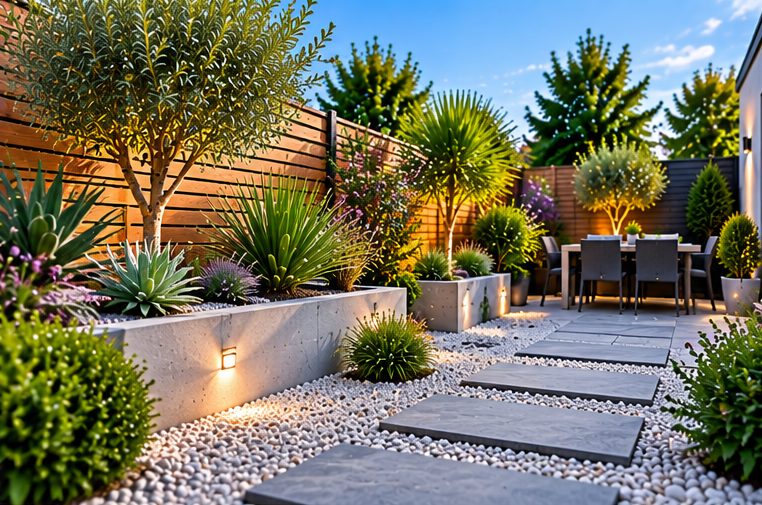
The front garden is the first thing visitors see, and the part most likely to be neglected. It faces the road, collects litter and leaves, and often has to handle the bins, the car and the post as well as any planting. A tired lawn and a bare strip of weeds can drag down an otherwise tidy house.
Low maintenance front gardens are not about covering everything in gravel. They are about choosing a few durable surfaces, a short list of tough plants and a layout that copes with real life. This guide walks through the choices for homes in Worcester, Kidderminster and the surrounding villages, including the drainage and parking points that are easy to overlook.
Most front gardens carry more duties than they appear to. They hold bins, maybe a bike store, a path to the door and, increasingly, a car or two. Work out which of these are fixed and which are flexible. A path should be wide enough for a pushchair or shopping, and it should lead directly to the door instead of winding for effect. Parking areas need to take weight and keep water off the road. Sketching where each thing goes helps you see how much space is left for planting. If the plot is small, treat plants as a frame around the practical parts, not as the main event.
Paving, block paving, resin bound surfaces, gravel and artificial grass each have a place. Block paving suits driveways and can be repaired in sections. Gravel is quick and drains well but wanders onto paths unless it has a firm edge, and it needs a membrane and a stable base. Artificial grass gives constant green without mowing, though it does not suit tyre traffic. Whichever you choose, the base matters more than the top layer. Compacted stone, a sensible fall away from the house and edging that holds everything in place will stop the weeds, sinking and spreading that make surfaces look scruffy.
Paving over a front garden with a non-porous surface can send a lot of rainwater straight into the road and drains. Permeable surfaces, or a fall towards a planted bed or soakaway, help water soak away instead. The rules around drive surfaces and dropped kerbs can apply, so if you are changing access, check with your local council first. Keep levels close to the damp-proof course of the house, and avoid raising soil against walls. Low walls and hedges can add privacy but should not block sight lines at the entrance. Sloping drives may need a drainage channel across the bottom.
Choose evergreens and long-lived shrubs that look acceptable all year, such as compact structural plants, with perennials and bulbs for seasonal colour. Group plants rather than scattering them, and stick to a small palette so the garden looks designed. Dense ground cover reduces weeding, while a mulch layer keeps soil moist. In a sunny, dry front garden, drought-tolerant planting copes with summer without watering, but new plants still need regular water in their first season. Avoid anything that will outgrow the space or drop heavy litter onto paths. Containers by the door add colour without committing the whole garden.
Prices follow the size of the area, the amount of digging and waste, the surface chosen, edging, drainage needs, any walling or steps, and the number of plants. Access matters, since many front gardens can only be reached from the road, which affects deliveries and skips. Ask for each element to be listed so you can adjust the scope. The state of the existing surface matters, since breaking out concrete or old paving is heavy work, and so is removing a hedge. Parking and turning needs can add to the build specification, and so can walls, gates and lighting. Where bins must be hidden, a screen or store adds a small extra element.
SPR Trees and Landscapes, at 6 Rose Avenue, Worcester, provides free quotations across Worcestershire, Herefordshire, Gloucestershire and north Warwickshire. Send a photo from the pavement, a note of what must stay and what you want to change, and we will arrange a visit to measure up and explain the options. Tell us how many vehicles use the space and whether anyone in the household has mobility needs, since these shape the path and step design. We will explain what each surface involves in upkeep, including how often it needs weeding, sweeping or brushing. The quotation is free, and we are happy to compare a gravel option with a paved or artificial one so you can see how they differ.
For low maintenance front gardens in Worcester or the surrounding towns, call or WhatsApp 07542 451291, or use the form below and tell us about the job.
Images on this page are illustrations only.
See all Low Maintenance Gardens services in Worcester →
It can be, if laid over a stable base with a membrane and firm edging. Without them, weeds grow through and stones scatter. Gravel is also noisy underfoot and awkward for wheelchairs and pushchairs, so think about how the garden is used. Edging is what holds it together.
Usually yes, though rules on drainage and access can apply, particularly for driveways onto a road. A permeable surface or drainage to a planted area is advisable. Check with your council if you plan to park there. Drainage tends to be the sticking point.
Hardy evergreen shrubs, ornamental grasses, and robust perennials suit most front gardens once established. Choose them to match your soil and sunlight, and plant them close enough to cover the ground. Mulch each year to keep weeds down.
Tell us about the job and we will be in touch, usually the same day.
Prefer to talk? Call 07542 451291 or WhatsApp us.