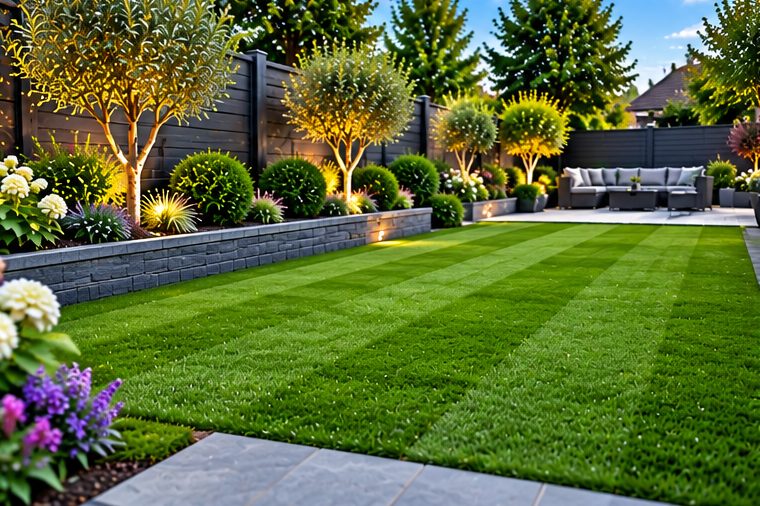
Some lawns can be rescued with feeding and scarifying. Others are so full of moss, bare patches, weeds and bumps that it is quicker and cheaper in effort to begin again. Lawn Replacement is a bigger decision than patching, and it deserves a clear plan before anything is dug up.
In this guide we look at when it is worth replacing a lawn, how Old Lawn Removal is carried out, what to do with the soil beneath, and how to give new turf a fair chance. It applies across Worcestershire, whether you are in Worcester, Evesham or a village in the Teme valley.
Before you commit, look honestly at the lawn. If grass still covers most of it, aeration, overseeding and better mowing may be enough. If more than half is moss or weed, if it holds water for days, or if the surface is lumpy with old building waste underneath, replacement makes sense. A thin lawn in dense shade will not improve with new turf alone, since the same conditions will defeat it again. Fix the cause first, whether that means pruning overhead branches, improving drainage or choosing a shade-tolerant seed mix.
Old turf is usually stripped with a turf cutter, which slices it into manageable strips just below the roots. On smaller lawns this can be done by hand with a spade. Alternatively, in some cases the lawn is killed off with a treatment, left to die back, and then dug in or rotovated, though this leaves a thatchy layer and may produce more weeds later. Stripped turf is heavy, so disposal needs planning. Skips, grab lorries or a pile in a back corner for composting are the usual options.
Once the turf is off, the soil can be assessed. Dig a spade deep and look at it. Compacted, grey ground with a hard layer needs breaking up with a fork or machine. Heavy clay benefits from added grit and organic matter, while light sandy soil may need compost to hold moisture. Old rubble, stones and roots should be picked out. This is also the time to correct dips and humps and to fix any drainage problem that was making the previous lawn fail. Rushing past this stage is the commonest reason replacement lawns disappoint.
The soil is raked to a fine, even tilth, firmed by treading or a light roller, and raked again. A pre-seed fertiliser may be worked in. Turf is laid in staggered brick-bond rows with tight joins and no gaps, then lightly pressed and watered thoroughly. Edges are trimmed with a sharp knife. Autumn and spring are generally the kindest seasons to lay, though turf can go down in summer if it can be watered regularly. Avoid laying onto frozen or waterlogged ground.
The main variables are the area, the amount of old turf to be removed and taken away, the condition of the soil, and any levelling or drainage correction. Access is important, as every load of turf in or out through a narrow passage adds time. Choice of turf grade also matters, from a hard-wearing family mix to a finer ornamental one. Seed is an alternative to turf and can reduce materials cost, though it takes longer to establish. A visit to inspect the ground is the fair way to price.
New turf needs steady watering for the first few weeks, enough that the soil beneath stays damp, not so much that it floats. Early morning is ideal. Keep foot traffic to a minimum until the roots knit in. The first cut should be high, with sharp blades, once the grass has clearly rooted. Feed lightly after a month or two. If an area looks stressed, check for dry edges first, since those often shrink back from the joins. Patience in this stage separates a lawn that thrives from one that struggles for years.
Let us know the approximate size, what is wrong with the lawn now, and how you use the garden. Photos help us understand the starting point. We will visit, check the soil and levels, and explain whether replacement or renovation fits better. You will receive a written quote with no obligation. Call or WhatsApp us through the buttons on this page.
For lawn replacement and old lawn removal in Worcester or the surrounding towns, call or WhatsApp 07542 451291, or use the form below and tell us about the job.
Images on this page are illustrations only.
See all Turf Laying services in Worcester →
This is generally not recommended. The old grass decomposes beneath the new turf, leaving a spongy, uneven surface and poor rooting. Stripping first gives a firmer, flatter base and lets you improve the soil underneath.
Early autumn and spring usually give kind conditions, with moist soil and mild temperatures. Summer laying is possible if you can keep watering. Avoid frozen, waterlogged or very hot dry spells.
It depends on the weather and the turf, but generally you should keep off until it has rooted, which usually takes a couple of weeks or so. Test by lifting a corner gently. If it resists, it is rooting.
Tell us about the job and we will be in touch, usually the same day.
Prefer to talk? Call 07542 451291 or WhatsApp us.