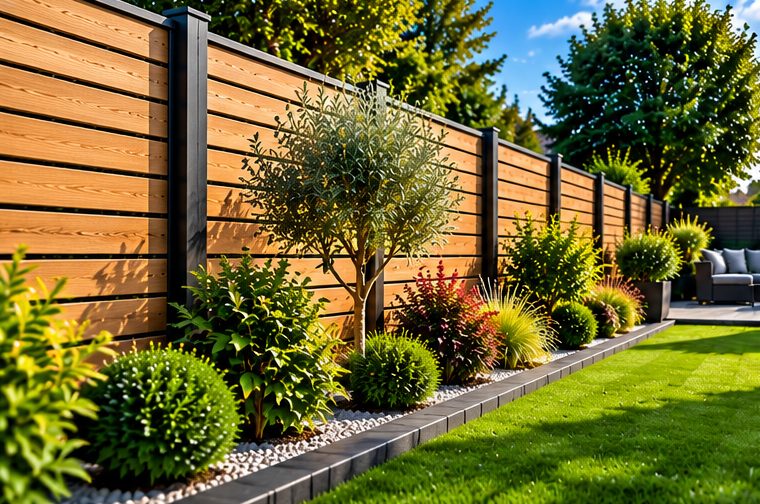
Garden fencing used to mean a choice between overlap panels and closeboard. Today more people ask for something cleaner: horizontal slats, tight vertical boards, or screens that look more like architecture than a boundary. Slatted garden fencing in particular has become popular in new-build estates and refreshed town gardens alike, from Worcester to Cheltenham.
It looks smart, but it is more exacting to install than a standard panel. Gaps, alignment and post quality are on show. This guide covers the main decisions: the style of slat, how much privacy you actually want, how posts and fixings are chosen, and what upkeep to expect over the years.
Horizontal slats make a garden feel wider and are the style most often associated with modern plots. Vertical slats feel taller and more formal and are usually easier to keep straight on slopes. Screen-style panels mix wider boards with open gaps to give a partial view through. Contemporary Garden Fencing may also combine materials, for example timber with aluminium posts or composite boards. Choose the style by looking at your house. A sharp, flat-fronted new house suits crisp horizontals. A period cottage garden may suit something softer.
Gap size is the main control. Tight slats give almost full privacy. Wider spacing lets light and air through and softens the look, but you can see through at an angle. Wind is another factor: a solid fence on an exposed plot takes more wind load than a fence with gaps, and posts need to be set to suit. If you overlook a neighbour or a road, consider mixing a solid lower section with a more open top. Standing in your garden and checking sightlines from the windows next door helps you decide.
The finish is only as good as the posts. Slatted fencing needs posts set plumb and at accurate spacing, because errors show along the whole run. Concrete or steel posts hold their line better than thin timber, though timber posts work well when properly sized and set deep. Fixings should be stainless or coated so they do not stain the boards. On sloping gardens the slats can step or follow the ground, and either approach must be planned ahead. A level string line along the top before cutting saves expensive mistakes.
Softwood that is pressure-treated, hardwood and composite all behave differently. Softwood weathers to a silvery grey unless you stain or oil it regularly. Hardwood holds colour longer but costs more and still weathers. Composite boards need almost no treatment. Whatever you choose, leave a small gap at the base so the boards are not constantly wet, and allow slats to move slightly with the seasons. Annual or biennial coats of stain or oil keep timber looking fresh, though many people let it grey naturally.
Slats mean more boards and more fixings, so the work takes longer than a panel fence of the same length. Material choice, post type, fence height, slope, gates and access all change the figure. Capping rails and trims add a finished look but add time. Removing an existing fence is separate. Because the style relies on neat detail, it is worth asking whether the installer builds on site or uses ready-made sections, and how they deal with changes in level.
The details at the edges tell you how well a slatted fence was planned. A matching gate keeps the line unbroken, but needs a rigid frame and sturdy hinges, since slats add weight and sag easily. Corners should be set out so the slats meet cleanly rather than ending in awkward offcuts. On sloping ground you can step the fence in sections or rake it to follow the land, and each approach changes the look. Ask to see how the installer proposes to handle these points before the work begins, rather than discovering the answer on site.
Tell us the length, the height you have in mind, and send a photo of the boundary. If you have seen a style you like, include that too. We will visit, talk through the options and put a written quote together. Call or WhatsApp using the buttons on this page to book a time.
For slatted and contemporary garden fencing in Worcester or the surrounding towns, call or WhatsApp 07542 451291, or use the form below and tell us about the job.
Images on this page are illustrations only.
See all Fencing Services services in Worcester →
Tight spacing gives high privacy, while wider gaps let you see through at certain angles. Stand where you will sit and check sightlines before deciding. Some people mix a solid lower section with a more open top.
Often not, but height limits apply. Fences near a highway are usually restricted to a lower height, and conservation areas or listed buildings may have extra rules. Check with your local council if you are unsure.
Apply a stain or oil every year or two, keep soil and plants off the lower boards, and clean off algae. Alternatively let softwood weather naturally to a grey finish, which many people like.
Tell us about the job and we will be in touch, usually the same day.
Prefer to talk? Call 07542 451291 or WhatsApp us.