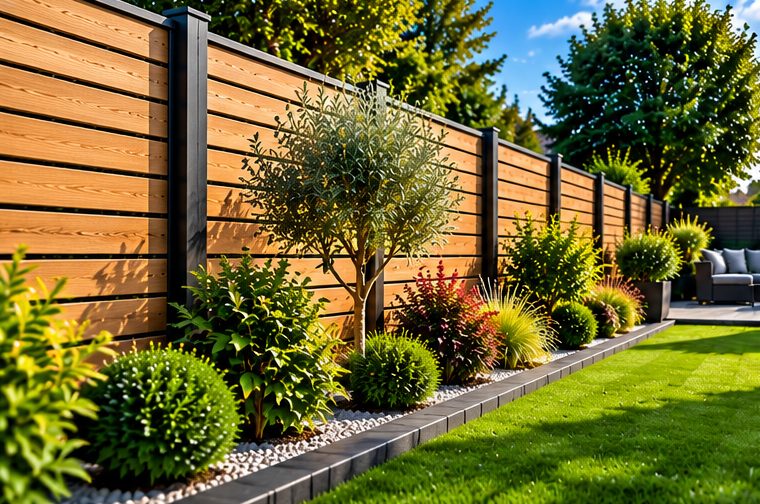
Putting up a new fence sounds simple until you start asking questions. Who owns the boundary? How tall can it be? Should the posts be timber or concrete? Is a panel fence enough for a windy, open plot, or do you need something heavier? A little thought at the start saves a lot of arguments and repairs later.
This guide covers garden fence installation for homes in Worcester, Droitwich Spa, Kidderminster, Evesham and the countryside around them. It looks at garden boundary fencing, the main choices in timber garden fencing, what makes a fence last, and how to prepare for a visit and quotation.
Before anything else, work out who is responsible for the boundary. Title plans and deeds sometimes mark ownership with a T-mark showing which side maintains it, though many properties have no such marking. It is good manners and good sense to tell your neighbours before work begins, particularly if the line of the fence is changing or old panels will be removed. Fences generally cannot exceed two metres in height in a back garden without permission, and the limit beside a road is lower, so a taller fence needs checking first. Listed properties and conservation areas can add further restrictions. Talking this through early saves frustration, and it also affects where posts can sensibly be placed.
Timber garden fencing comes in several forms, each with a different balance of privacy, strength and appearance. The main options are:
Posts are what a fence stands or falls on. They need to be set deep enough in firm ground, generally in concrete or a quick-setting mix, and spaced to match panels or rails. Timber posts that sit in wet soil rot at ground level first, so many installers prefer concrete posts or a post set slightly above the soil with a gravel board beneath the fence. Gravel boards keep the bottom panel clear of the damp, and they are much easier to replace than a whole panel. On sloping ground, panels are stepped or the fence is built raking so the bottoms follow the contours. Old fence stumps, tree roots and buried concrete can interfere, which is why a site visit matters.
Most garden timber is pressure-treated to resist rot, but the quality of the treatment and the build still vary. Cut ends should be re-treated, and a topping rail or capping stops rainwater soaking in at the top. Painting or staining the fence once it has dried out gives extra protection and lets you pick a colour to suit the garden. Expect to re-coat every few years, depending on exposure. Wind is the real enemy of panel fences, so exposed gardens on open land west of the Malvern Hills or on higher ground benefit from stronger posts and fixings. Keeping soil, compost and plants from piling against the fence also adds years of life.
The length of the run is the obvious factor, but several others matter more than people expect. The height, the style of fence, the type of posts and whether gravel boards are included all change the price. Removing and disposing of an old fence takes time. So do slopes, awkward access, hard or rocky ground, and trees or hedges near the line. Gates, corners and different heights along one boundary add detail work. Without seeing the site, any figure will be a rough guess, which is why a visit and written quotation are the safest basis for comparing offers.
Contact SPR Trees and Landscapes with the approximate length, the height you want, the style you like and any photos of the boundary. Tell us if there is an old fence to remove, and if neighbours are aware. We will visit, measure up, explain the options and send a free written quotation.
For garden fence installation in Worcester or the surrounding towns, call or WhatsApp 07542 451291, or use the form below and tell us about the job.
Images on this page are illustrations only.
See all Fencing Services services in Worcester →
In most back gardens a fence up to two metres is allowed without permission, but beside a highway or road the limit is lower. Listed buildings and some estates have their own rules. If your fence is taller than usual, check with the local council before you order.
Concrete posts resist rot and last longest in wet ground, while timber posts look more traditional and are easier to fix to. Many gardens use concrete posts with timber panels and gravel boards. The right choice depends on the soil, the exposure and what you want it to look like.
You are not always obliged to, but it is sensible and courteous. If you are replacing a shared fence or moving the line, an early conversation avoids disputes. Make sure you know where the boundary falls before any posts are dug in.
Tell us about the job and we will be in touch, usually the same day.
Prefer to talk? Call 07542 451291 or WhatsApp us.