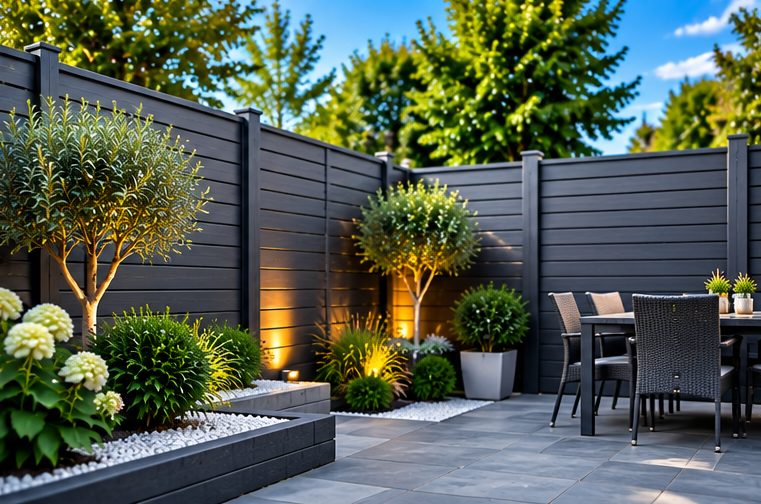
A fence rarely fails all at once. First one panel bows in a gust, then a post snaps at ground level, then the neighbour mentions the lean. At some point, patching every storm casualty costs more time and money than starting again, and the useful question becomes how to choose that moment sensibly.
This guide is about Garden Fence Replacement as a planned job rather than an emergency. It covers how to judge the condition of an old run, who is responsible for which boundary, what to specify in place of what was there before, and how to avoid the mistakes that make a new fence rot as quickly as the last one. It applies across Worcester, Droitwich Spa, Kidderminster and the villages in between.
Push on each post and look at the base. Posts that wobble, or that feel soft and crumble under a screwdriver at soil level, are the real test, because panels can be swapped but rotten posts mean the structure has gone. If most posts in a run are sound and only a few panels have blown out, selective repair is reasonable. If half the posts are rotten, the gravel boards have decayed and the rails are loose, a fresh run is the more honest answer. Consider the age as well. Softwood fences in damp ground often need attention long before anything else in the garden does, and slow decline is cheaper to fix early than late.
Before taking anything down, work out whose fence it is. Title plans and deeds sometimes mark boundary ownership with a T-mark, but they are not always clear, and the old custom of the fence facing the neighbour's side is only a custom. Talk to the people next door early. They may share the cost, or want a taller panel, or have plants trained on the old fence that need protecting. Check for gates, shared access and drains running close to the line. A calm conversation in advance saves a good deal of awkwardness, particularly where old fences have been leaned on by sheds, climbers or compost bins.
Do not simply copy the old fence. Think about what failed and why. If posts rotted at the base, concrete posts or timber posts in post spurs lift the wood clear of the soil. If wind took panels out, closeboard or a sturdier frame resists better than lightweight overlap. Consider the ground slope, because stepping panels or racking boards suits a hillside better than a level run. Heights are limited close to roads, and some gardens have restrictions in their deeds. Treated timber lasts longer than untreated, and good gravel boards stop panels sitting in damp earth. Details like capping rails and fixings matter more than the headline style.
The length of the run and height of the fence are the starting points. After that, the effort is shaped by removing and disposing of the old fence, the type of post and panel, ground conditions such as tree roots or buried rubble, and how easily materials can be moved to the back garden. Sloping ground, corners and gates all add work. Fences set into hard standing, walls or concrete take longer than ones into soil. Taller or heavier styles need stronger posts. We measure on site and talk through options before quoting, so the figure matches the job.
Send us the approximate length, the height you would like, the type of fence you have now and any problems you can see. Tell us about gates, slopes, trees and access, and whether the boundary is shared. We will visit, check the posts and ground, suggest suitable options and give a written quotation. Our quotations and advice are free, and we cover Worcester and surrounding parts of Worcestershire, Herefordshire, Gloucestershire and north Warwickshire. If a few repairs will do, we will tell you so.
For garden fence replacement in Worcester or the surrounding towns, call or WhatsApp 07542 451291, or use the form below and tell us about the job.
Images on this page are illustrations only.
See all Fencing Services services in Worcester →
If the fence is yours and stays in the same place, you generally do not need permission, but it is courteous to tell them. If the ownership is shared or unclear, or you plan to move the line, discuss it first and check your deeds.
The general limit for a boundary fence is around two metres at the back, and lower where it fronts a highway. Local conditions and deeds can alter this. Check with your council if you are unsure before choosing the height.
It depends on timber quality, treatment, ground conditions and how the posts are set. A fence with posts kept clear of damp soil and with gravel boards will normally last much longer than one set straight into wet ground.
Tell us about the job and we will be in touch, usually the same day.
Prefer to talk? Call 07542 451291 or WhatsApp us.