
Patio slabbing across Hereford, from Victorian terrace yards to the larger lawns of post-war suburbs, with firm bases and drainage planned for a city in the Wye valley.
Hereford covers a lot of housing types, and the right patio depends on which one you live in. Victorian terraces tend to have long thin yards, inter-war and post-war semis have wider lawns, and newer pockets of housing often have small paved corners that need a rethink.
Our approach is the same everywhere: look at the plot, agree a layout, prepare the ground properly and lay with care. Because the city sits in a river valley, we also pay attention to how wet the soil is and whether water has anywhere to go once rain falls on a bigger paved area.
In a terrace, the job is often to replace cracked concrete or a patchwork of old slabs with a single clean surface, perhaps with steps up to a rear gate or shed. In a suburban garden, you may want a larger terrace off the back of the house with room for a table, a barbecue and possibly a path round the side. We draw out the shape on site with spray paint or string so you can judge the proportions. Choosing where the patio sits relative to the sun is as important as its size.
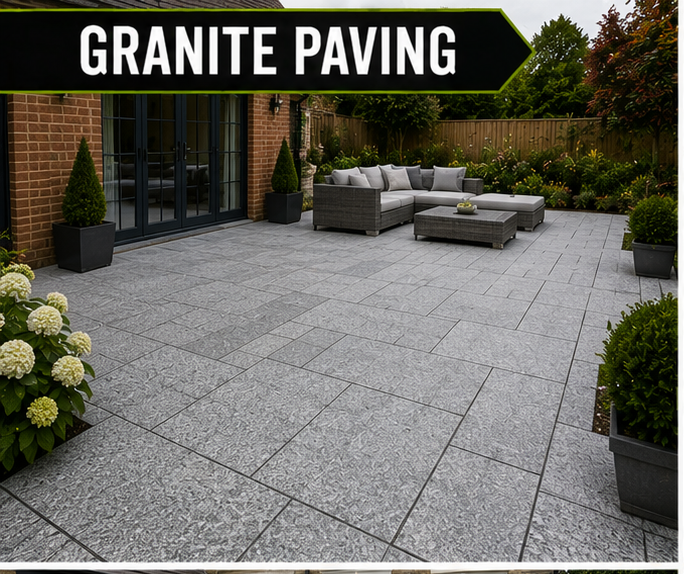
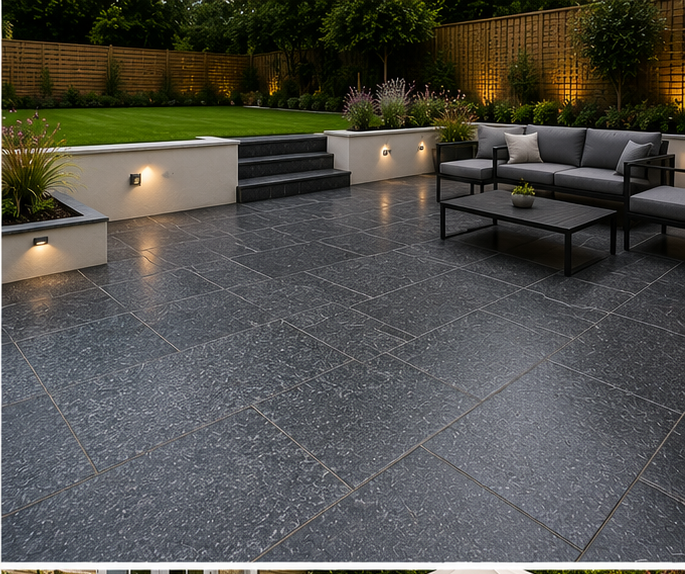
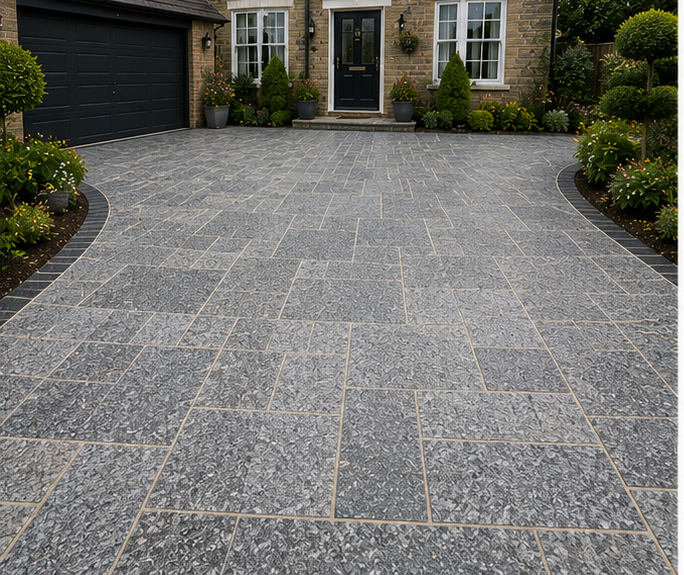
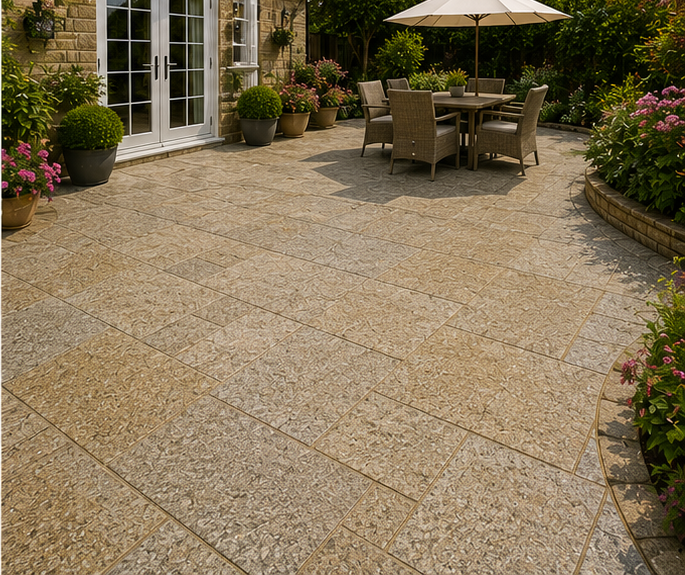
Red Herefordshire brick and rendered post-war walls both work with a range of surfaces. Sandstone in warm greys or buff gives a classic look, limestone is lighter, and porcelain offers an even, easily cleaned finish. Block paving is a familiar choice for driveways on the suburban estates and holds up well to cars when laid on the right base with edge restraints. Pattern matters too: stretcher bond and herringbone each suit different spaces. We bring samples so you can compare in your own light.
Preparation decides whether a patio stays flat. We lift turf or old paving, dig out to the depth required, and compact crushed stone in layers. Falls are set to carry water away from the house, and where a larger area is going down, we look at drains or soakaways to manage the extra run-off. Heavy, clay-rich soils can hold water, so we avoid assuming a soakaway will cope and check conditions first. Joints are filled to suit the material, and edges are restrained so slabs do not creep apart.
We work throughout Hereford and nearby, including Leominster, Ross-on-Wye, Ledbury and Bromyard. The cathedral city has plenty of older streets where access is limited, and our planning allows for narrow gates and shared passages. Wherever you are, we start with a free visit, give clear advice about what is needed and provide a quote in writing. If you are comparing options, we will explain the differences honestly rather than steer you towards the largest job.
We also take on patio slabbing work in nearby Leominster, Ross-on-Wye, Ledbury, Bromyard.
“Jim and Dan did a brilliant job on my 90ft conifer. Its a lot safer now and I have more light in the garden...”
“The boys did an excellent job... pruned my trees back and remove one tree that had split...”
“The guys were prompt & proffesional removed an old ash for me thanks guys”
Yes. We break out and remove the old surface, check the ground underneath and rebuild with a proper sub-base and new paving. Access through the house or a back lane affects the method and is checked first.
Block paving is usually preferred for drives because it spreads loads and individual blocks can be lifted for repair. Large slabs can suit a drive if laid on a thicker base. We advise on both.
Often yes, since a larger hard surface sends more water towards the edges. Depending on the soil and falls, that might mean a channel drain, a soakaway or simply directing run-off to a border.
SPR Trees & Landscapes, 6 Rose Avenue, Worcester, WR4 9PY
Tell us what you need in Hereford and we will get back to you, usually the same day.
Prefer to talk? Call 07542 451291 or WhatsApp us.