For Chipping Campden gardens, mature hedges can be an important landscape feature, making careful maintenance useful where customers want to retain privacy without letting growth become excessive.
SPR Trees & Landscapes provides professional hedge maintenance in Chipping Campden for homeowners, landlords and businesses needing help with routine cutting, shaping or heavily overgrown hedges.
For Chipping Campden gardens, mature hedges can be an important landscape feature, making careful maintenance useful where customers want to retain privacy without letting growth become excessive.
With over 15 years' experience, SPR can help with everything from regular hedge trimming through to substantial reductions on large conifer and Leylandii hedges. Every hedge is quoted after seeing it, because length, height, width, species and access all change the job.
Cutting a screening hedge is about maintaining the screen, not just tidying it. That means keeping the face full and dense rather than cutting hard into it, because a hedge cut too tight thins out and you start seeing through the very thing you planted for privacy.
Shaping a screening hedge means keeping it thick where the screening matters and neat everywhere else. A slight taper helps: it keeps the base dense, which is usually exactly where you want the privacy.
Reducing a screening hedge is the one to think about hardest, because reduction is the operation that can cost you the screen. On a broadleaf hedge it grows back; on a conifer it does not. Worth knowing which before agreeing anything.
A conifer hedge is usually there for screening, which makes over-cutting it the expensive mistake. There is no regrowth from bare wood, so a face cut too hard is a permanent gap in the screen. The green shell is the whole working surface.
Leylandii are planted for privacy and they deliver it, provided they are cut on schedule. Once bare wood is exposed the screen has a hole in it permanently, so the discipline of an annual cut is what protects the reason they were planted.
The rule most people have half-heard is the "two metre" one, and it is worth stating properly because it is almost always repeated wrong. There is no legal maximum height for a hedge. You are not obliged to keep a hedge at two metres and nobody can make you cut one simply because it is taller than that. What the two-metre figure actually marks is the threshold at which a neighbour can complain to Cotswold District Council under Part 8 of the Anti-social Behaviour Act 2003.
For a complaint to qualify, the hedge has to be a line of two or more evergreens over two metres tall that acts as a barrier to light or access. That means conifers, laurel and privet are in scope; beech and hornbeam, being deciduous, are not, and neither is a single tree however large. The neighbour has to have tried to sort it out directly first, and Cotswold District Council charges a fee to take the complaint on — fees vary widely between councils and change each April, so it is worth checking the current figure rather than relying on what someone was charged elsewhere.
If Cotswold District Council does issue a remedial notice, there are firm limits on what it can require. It cannot order the hedge to be reduced below two metres, and it cannot order it removed. It can require a reduction to some height at or above two metres and require that height to be maintained, and the notice is registered as a local land charge, so it stays with the property when it is sold.
It is worth being precise about nesting birds, because the shorthand version puts people off booking work they could perfectly well have done. There is no closed season for cutting a garden hedge. The offence is damaging an active nest, and the way that is avoided is a proper inspection before starting rather than a date on a calendar. The RSPB puts the main season at March to September and suggests cutting between September and the end of February where you have a free choice, which is good practice rather than a legal requirement.
You may also have been told that hedge cutting is banned from 1 March to 31 August. That ban is real, but it is a farming rule: the Management of Hedgerows (England) Regulations 2024 apply to hedgerows on agricultural land and expressly exclude any hedgerow within the curtilage of a dwelling house. An ordinary garden hedge is outside them, and outside the older Hedgerows Regulations 1997 for the same reason.
One genuine catch: a hedge itself cannot carry a Tree Preservation Order, but a tree growing up within one can, and an old hedge that has become a line of trees can be covered too. A protected tree needs written consent from Cotswold District Council at any size — there is no small-tree exemption for a TPO. If the property is in a conservation area, a tree in the hedge needs six weeks' notice unless its stem is under 75mm across, measured 1.5m up. The hedge around it stays unrestricted either way. Where a boundary is a mix of hedge and self-sown trees, that is worth checking before work starts.
Because SPR Trees & Landscapes covers landscaping as well as hedge work, a job that starts as a reduction can carry straight on into clearance, fencing or turfing without a second company, a second quote and a second set of access arrangements.
A hedge and the trees behind it are usually the same boundary problem viewed from two angles. Having one company look at both means the work is planned around what the boundary needs rather than around who was booked first.
Five guides written for Chipping Campden homeowners, covering what hedge work costs, what drives the price and how to decide what you actually need.
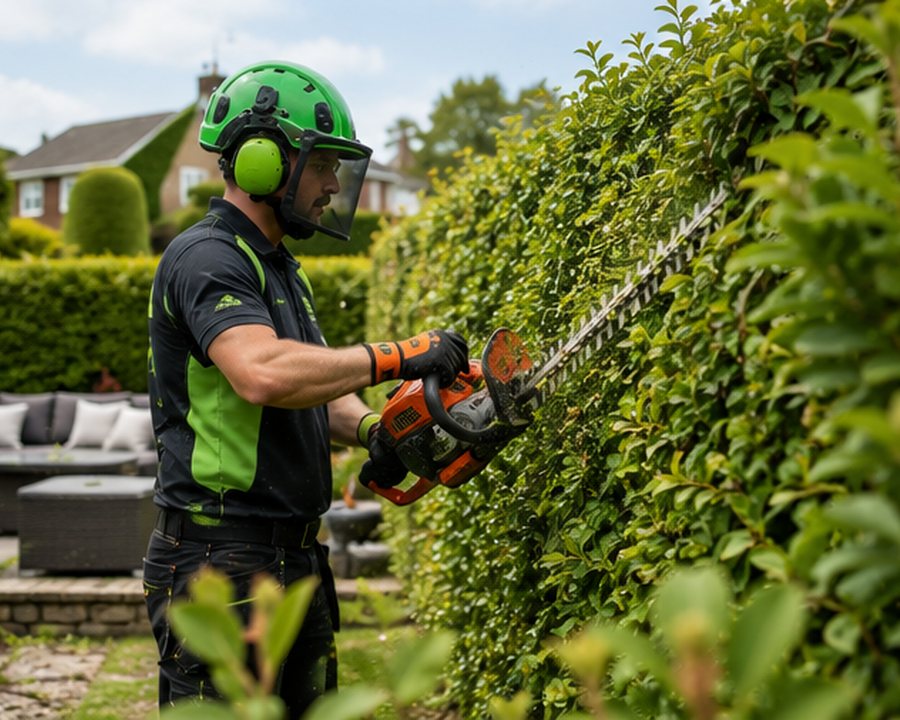
Hedge cutting and reduction carried out by SPR across Worcestershire and the surrounding counties.
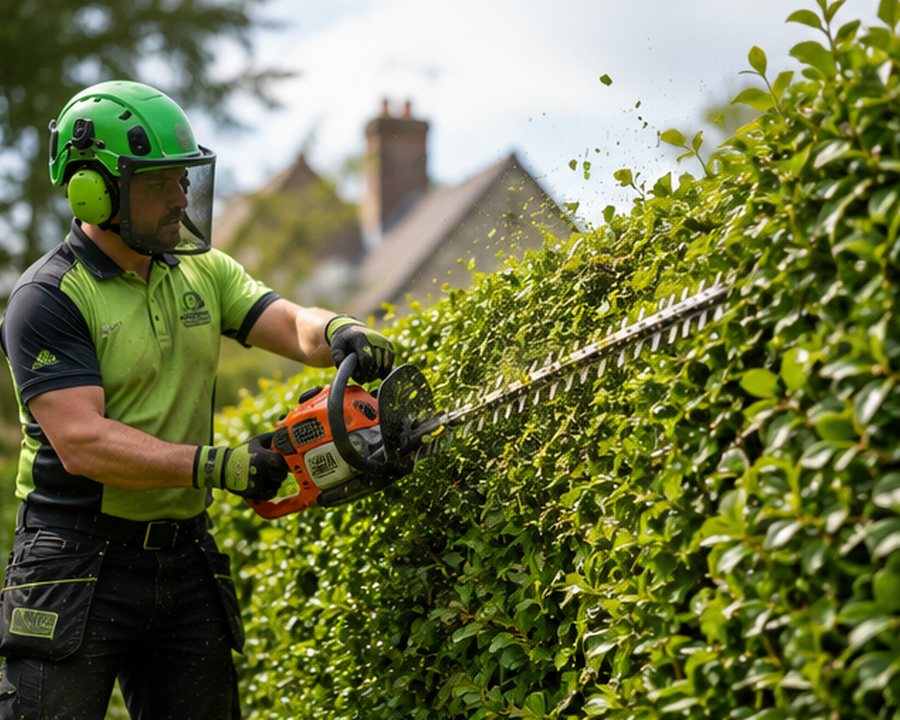
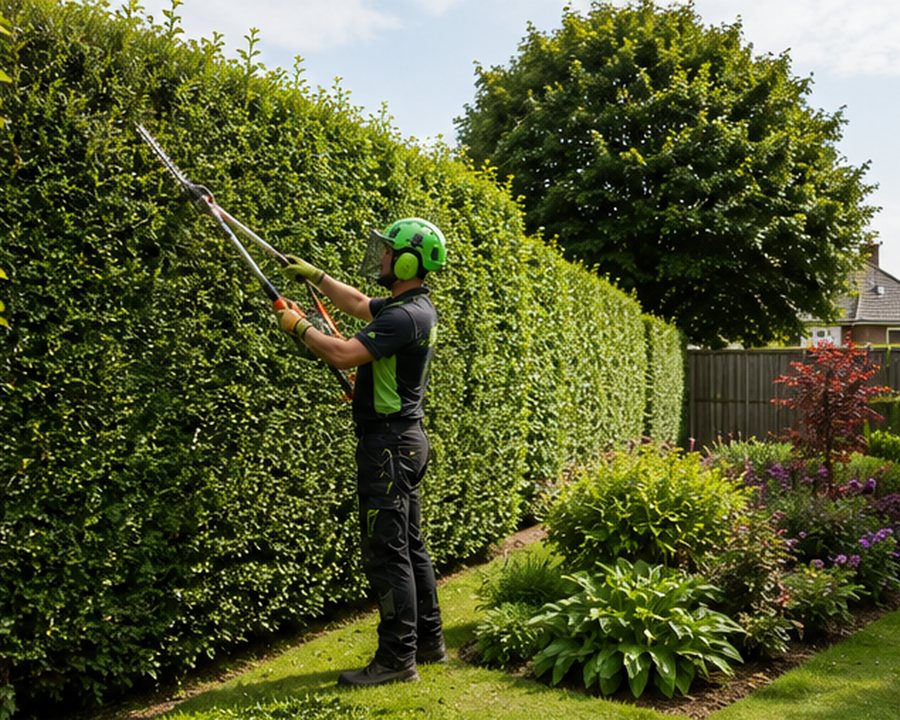
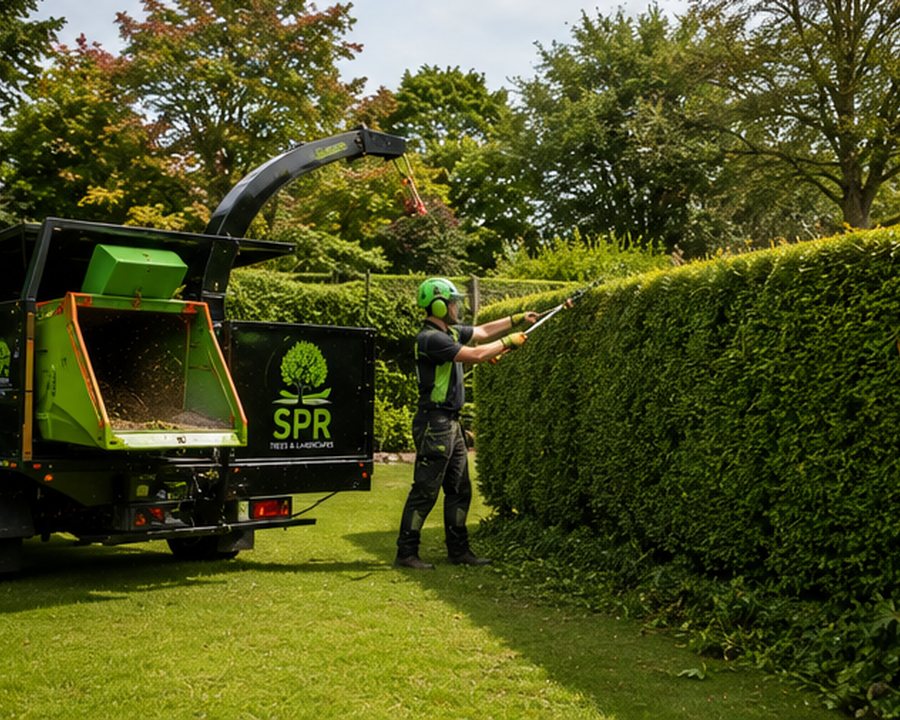
“Trimmed large conifer hedge and bushes - A really excellent job done would recommend”
“We employed these guys to trim the conifers at the end of our garden. The work they carried out was first...”
“Cut and trimmed our Leylandii hedge two weeks ago. Took away the cuttings. Excellent job, as usual....”
The cost depends on the hedge's length, height, width, condition, access and the amount of work required. Contact SPR for a free quotation.
Yes. Professional hedge cutting, trimming and shaping are core SPR services.
Yes. We can assess large overgrown hedges and discuss appropriate height reduction.
Yes. Leylandii hedge cutting and reduction form part of our hedge-maintenance service.
Depending on the hedge and its condition, we can assess excessive width and discuss the appropriate work.
Yes. We provide professional cutting and reduction for large conifer hedges.
Yes. SPR also provides tree pruning, reductions, removals and stump grinding.
Yes. Call or WhatsApp 07542 451291.
No. There is no legal maximum height for a garden hedge, and you cannot be made to cut one just for being tall. Two metres is the point at which a neighbour can complain to Cotswold District Council about an evergreen hedge that blocks their light or access — and even then the council cannot require it below two metres or order it removed.
Yes, provided there is no active nest in the section being cut. It is not an offence to cut a hedge in summer; the offence is damaging a nest that is in use or being built. We check before starting and leave any part with an active nest until the birds have finished. The 1 March to 31 August ban you may have read about applies to farm hedgerows, not garden ones.
SPR covers Worcester and the surrounding towns for hedge maintenance, tree surgery and wider landscaping.
SPR Trees & Landscapes, 6 Rose Avenue, Worcester, WR4 9PY
Need a hedge cut, shaped or reduced in Chipping Campden? Tell us what you need and we'll get back to you — usually the same day.
Prefer to talk? Call 07542 451291 or WhatsApp us.