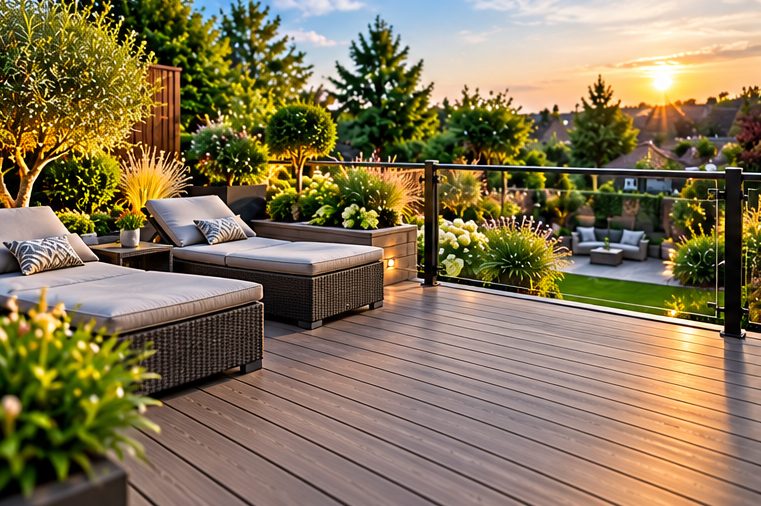
Steps are small but they decide whether a deck is a pleasure to use or a hazard. A raised deck, a lawn that drops away from the patio door or a change of level across a sloping garden all need a way up and down. Done well, composite decking steps feel natural underfoot. Done badly, they trip you in the dark and look like an afterthought.
This guide is for homeowners in Worcester, Malvern, Evesham and surrounding villages who are planning a deck and want to understand how the steps are designed. It covers the measurements that matter, the frame behind the boards, safety in wet weather, lighting, and what to expect from a quotation.
Every step has two key dimensions. The rise is the height of each step, and the going is the depth you put your foot on. Comfortable steps keep both consistent from top to bottom, because a tiny variation is what causes people to stumble. Garden steps are usually a little gentler than internal stairs, with a shallow rise and a generous going, since people carry trays, plants and shopping outdoors. Start by measuring the total height from the lawn or path to the top of the deck, then divide it evenly. If the numbers do not work, the usual fix is to adjust the level of the ground at the bottom or add a landing, rather than squeezing in uneven treads.
Composite boards are not structural. They rely on a solid frame beneath, usually pressure-treated timber or a metal system, supporting each tread. For steps, that normally means cut strings, which are the angled side supports, with cross bearers beneath each tread. Things to think about:
Composite has a reputation for being slippery when wet, and some products are better than others. Boards with a grooved or textured finish offer more grip than smooth ones. Shaded steps under trees or beside a north-facing wall stay damp and can grow algae, so those locations deserve the most careful choice of surface. Adding a contrasting nosing along the front edge of each tread helps your eye pick out the step, which matters at dusk and for older family members. Anti-slip strips are available, though they should be fitted neatly. Regular sweeping and washing remove the film of dirt that creates slippery patches, and avoiding aggressive pressure washing keeps the surface from being damaged.
Low-level lighting makes steps both safer and nicer to look at. Small recessed lights fitted into risers or the string, or lights on posts at the sides, cast light across the treads without glare. Cable routes should be planned before the boards go down. Handrails become important when the drop is significant, and the rules on guarding are stricter on higher decks, so ask what applies. Composite fascia boards and trims close off the sides and the gap beneath, giving a clean look and keeping out leaves, though some ventilation must remain. Planters, curved edges or wide, bench-style bottom steps can soften the shape and turn the steps into a feature.
Price depends on the number of steps, their width, the height of the deck and the ground at the base. Wide, curved or multi-direction steps need more cutting and framing than a simple straight flight. The choice of board range, trims, lighting and handrails changes the total, as does any groundwork such as levelling a slope or laying a landing slab. Access and the need to remove existing timber steps also add time. Because steps are usually quoted alongside the main deck, a visit is the easiest way to see how the two should connect.
Contact SPR Trees and Landscapes with a few photos of the spot, the approximate drop in height and any ideas on style. We will visit, take measurements, talk through grip, lighting and edge details, and give you a free written quotation.
For composite decking steps in Worcester or the surrounding towns, call or WhatsApp 07542 451291, or use the form below and tell us about the job.
Images on this page are illustrations only.
See all Composite Decking Installers services in Worcester →
It depends on the total drop from the deck surface to the ground. We divide that height into equal rises, keeping each comfortable. A deck close to the ground may need only one step or none, while a taller one will need a flight with a landing or handrail.
They can be when wet, frosty or covered in algae. Choosing a textured board, adding contrast nosing and keeping the surface clean reduces the risk. Shaded steps need extra attention, and some homeowners add anti-slip inserts for peace of mind.
Often yes, provided the existing frame is sound and the steps can be fixed to it safely. We would check the condition of the framework first. If it has rot or movement, repairing that is better done before adding new composite steps.
Tell us about the job and we will be in touch, usually the same day.
Prefer to talk? Call 07542 451291 or WhatsApp us.