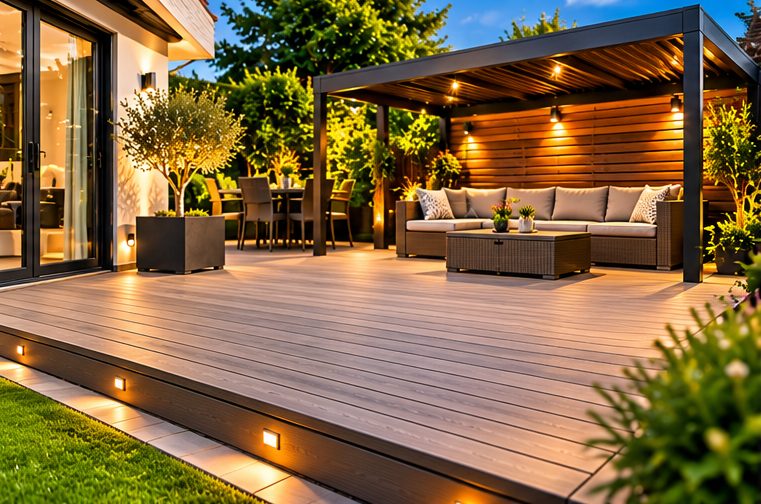
A small garden asks a lot of its surfaces. Every square metre has to earn its place, and a deck that is too big, too tall or poorly drained can swallow the whole plot. Composite Decking for Patios, laid over or in place of old slabs, is one way to gain a flatter, warmer, cleaner seating area without a mountain of upkeep.
Terraced and semi-detached plots in and around Worcester, Droitwich Spa and Stratford-upon-Avon often have yards only a few metres deep. This guide covers how to fit decking into tight spaces, what to do about levels and drainage, and what questions to ask before any boards are ordered.
Start by working out what you want to do on it. A bistro table and two chairs need far less room than a six-seat dining set with space to pull chairs out. Mark the footprint with string or chalk and live with it for a day. Running boards along the longest dimension can make a narrow garden look wider if the lines point where you want the eye to travel. Leave a strip of planting or gravel along at least one edge so the garden does not feel entirely hard. Keep gates, bin routes and door thresholds clear.
Composite Decking for Small Gardens often sits close to the back door, so the finished height needs thought. Building regulations and good practice both want the deck to sit below the damp-proof course of the house wall, which usually means staying a good distance beneath the door sill. A level just under the threshold makes stepping out easy but leaves less room for the frame. Low-profile frames are worth discussing, particularly when decking over an existing patio. Ask your installer to measure the damp-proof course and show you the proposed height before building starts.
Laying composite over existing slabs can save digging, but only if the patio is sound. Cracked, sunken or standing-water slabs will pass their problems up to the deck. The frame needs a flat, stable surface and a way for water to escape sideways. Tiny packers or adjustable pedestals can correct small level differences. Slabs that hold water against a wall are better lifted and replaced with a proper drained base. Look at the patio after a heavy shower to see where puddles collect, because the deck above will need to let that water run away.
Composite boards in dark colours can feel hot underfoot on strong summer days, particularly in a south-facing yard. Lighter shades stay cooler. Textured or grooved faces give more grip when wet, which matters on small decks near north-facing walls where algae can grow. Spills on a pale board are visible, so think about whether you prefer a colour that hides marks. Make sure a ventilated gap runs beneath the boards, since trapped damp and debris shorten the life of any frame, however good the board above it.
Size and complexity are the main drivers, but in a small garden the extras matter just as much. Removing an old deck or patio, getting materials through a narrow side passage, forming steps, trimming boards around corners and drainage details all add labour. The type of frame, treated timber or aluminium, makes a difference to both the build and the lifespan. Fascia boards, lighting channels and edging trims are small additions that change the finished look. A visit allows accurate measuring, which is more reliable than guessing from a photo.
Send us a photo of your yard or patio, the approximate size, and a note of any steps or doors that open onto it. We will visit, check levels and drainage, show you board samples, and provide a written quote with the frame, boards, and trims itemised. Call or WhatsApp through the buttons on this page and we will arrange a time.
For composite decking for patios and small gardens in Worcester or the surrounding towns, call or WhatsApp 07542 451291, or use the form below and tell us about the job.
Images on this page are illustrations only.
See all Composite Decking Installers services in Worcester →
Yes, if the patio is stable, reasonably level and drains freely. The frame still needs ventilation and a way for water to escape. Cracked or sunken slabs should be repaired or lifted first, because the deck cannot hide movement underneath.
Darker boards can feel warm underfoot in strong sunshine, especially in a south-facing garden. Lighter colours stay cooler. If bare feet matter to you, look at samples in direct daylight and ask how the board is made.
Often not, but it depends on the height, the size and your property. Raised decks, listed buildings or conservation areas can bring extra rules. Check with your local council before building, and ask your installer what height they propose.
Tell us about the job and we will be in touch, usually the same day.
Prefer to talk? Call 07542 451291 or WhatsApp us.