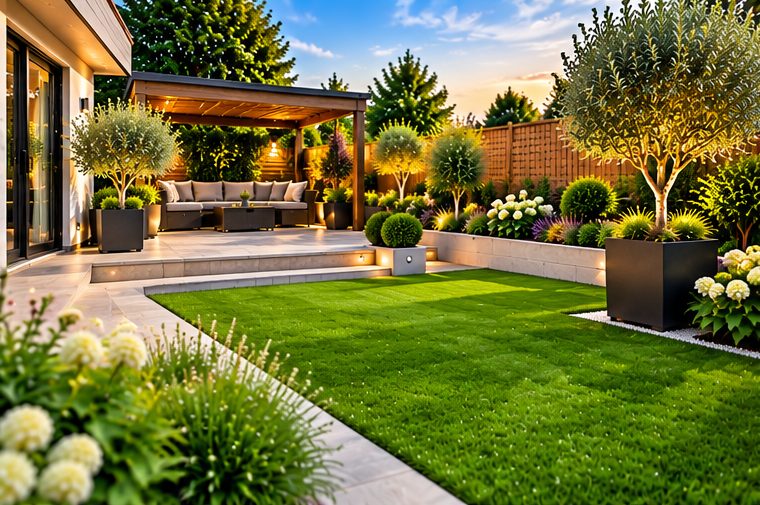
Beds and borders give a garden its seasons. They also give it problems if they are badly made: soil washes onto paths, timber rots, weeds creep in, and plants fail because the ground never suited them. A bit of planning before construction makes all the difference. Raised garden beds and garden planting and borders reward careful thought at the start.
This guide looks at raised garden beds as well as garden planting and borders more broadly, explaining when raising the soil helps, how to choose edges and materials, and how to match plants to a plot in Worcestershire, where clay, wet winters and dry spells can all make life hard for new planting.
Raised beds solve specific problems. They lift poor or compacted soil out of the equation by letting you fill with good topsoil and compost. They make growing vegetables and herbs easier on the back, define borders neatly, and can hold a slope. They warm earlier in spring and drain better, which is helpful on heavy clay. However, they are not essential for every garden. A traditional border dug into healthy ground needs no walls at all. Raised beds also dry out faster in summer, so watering needs more attention. Decide whether you want height for comfort, drainage, shape or looks.
Beds can be built from treated timber, sleepers, brick, blocks, stone, or metal. Timber is quick and warm looking, though it rots eventually, particularly when soil is piled against thin boards. Brick or stone lasts longer and can double as seating at a suitable height, but needs a proper footing. Heights vary: low beds suit flowers, while waist-height ones help gardeners with limited mobility. Keep beds narrow enough to reach the middle without stepping in, normally about a metre to a metre and a half across. Line timber with membrane that lets water through but keeps soil from the wood, and make sure the base is open to the ground for drainage.
Whatever the structure, good soil is the real investment. Remove weeds first, especially roots of perennial weeds, then loosen the ground underneath so water can drain. Fill with quality topsoil and organic matter, adding grit if the base is clay. Do not simply bury turf or builder's rubble. Allow for settling by overfilling slightly. Leave space for paths between beds wide enough for a barrow, and check that surface water has somewhere to go instead of pooling against walls and timber. Check the bottom of the bed for compacted layers and break them up so water does not stay trapped.
Choose plants for the conditions you actually have: sun or shade, wet or dry, acid or alkaline. Plant in drifts, not single specimens, and mix shrubs, perennials and bulbs for interest across the year. Keep taller plants behind and leave room for growth, since many are planted too tightly. A deep layer of mulch suppresses weeds, holds moisture and feeds the soil. Water new plants thoroughly through their first season, even in wet weather, as roots take time to establish. Autumn planting often suits Worcestershire gardens because soil is warm and rain follows. Cutting back dead growth in spring keeps borders tidy.
Costs follow the length and height of bed walls, the materials, the volume of soil and compost, ground clearance, access, edging and the number of plants. Mature plants cost more than young ones. Ask for the quote to separate construction from soil and planting, so it is clear what each part involves. The height and length of any walls drive most of the effort, because every extra course needs more material and more soil behind it. Weed clearance, awkward corners and distance from the road for deliveries all add to the day, and so do mature or larger plants.
SPR Trees and Landscapes, at 6 Rose Avenue, Worcester, gives free quotations for raised beds and planted borders across Worcestershire, Herefordshire, Gloucestershire and north Warwickshire. Tell us what you want to grow, how much sun the area gets, and send photos. We will visit, check the soil and talk through the options. Photos of the area at different times of day show the sun well. A short note about soil type, such as sticky clay or light sand, saves guesswork. We will talk through realistic heights, bed widths and plant lists with you on site, and the free quotation will make clear which parts are structure, soil and plants. If you are undecided about materials, we can compare two options so the trade-offs are plain.
For raised beds, planting and borders in Worcester or the surrounding towns, call or WhatsApp 07542 451291, or use the form below and tell us about the job.
Images on this page are illustrations only.
See all Landscaping services in Worcester →
For most flowers and vegetables, a depth that gives roughly thirty centimetres of good soil is enough, provided the base below is loosened. Deep-rooted crops or beds on solid ground may need more. We can advise once we see the site.
Eventually, yes, though treated and thicker timber lasts longer. Lining the inside with permeable membrane and keeping the base free draining slows decay. Brick or stone beds last far longer but cost more effort to build. Keep drainage clear at the base.
Early autumn and spring are generally favoured, when soil is workable and not too dry. Container plants can go in most of the year with enough watering. Summer planting works but demands regular attention during dry weather. Water well after planting.
Tell us about the job and we will be in touch, usually the same day.
Prefer to talk? Call 07542 451291 or WhatsApp us.