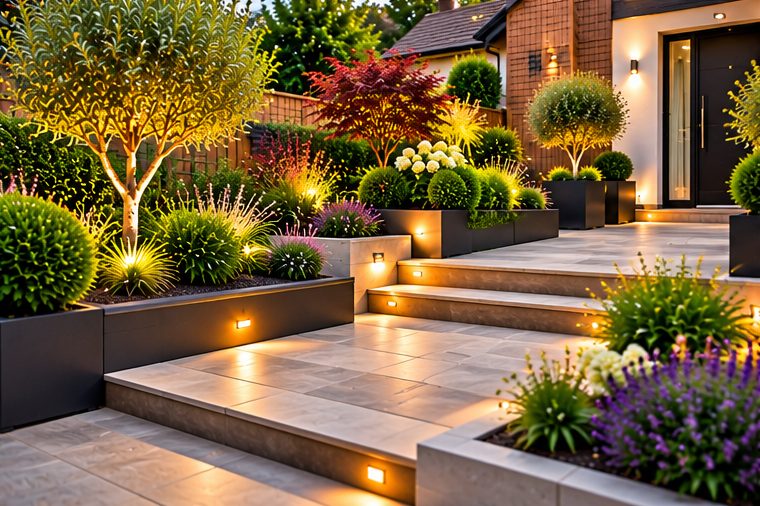
Paving is the part of a garden you walk, sit and carry things across every day, so it shows its faults quickly. A rocking slab, a puddle that never drains or a path that has sunk beside the lawn are all signs of work that looked fine on the day and failed underneath.
This guide covers Garden Patio Construction, Garden Paving Installation and Garden Path Construction as three sides of the same problem: building a firm, level, free-draining surface. It is written for homeowners in Worcester, Kidderminster and Hereford, where heavy clay soils and wet winters make the base more important than the slab on top.
Excavation comes first, taking out turf and soil to leave room for a compacted sub-base, a bedding layer and the paving itself, with the finished level sitting below any damp proof course on the house. The sub-base of crushed stone is compacted in layers, then a screeded bed or mortar is laid. Falls of a gentle slope away from the building move water off the surface. Slabs set only on dabs of mortar tend to rock and fail, so a full bed is preferred for anything that will carry furniture. On clay, a deeper base and edge restraint prevent seasonal movement from tilting the corners. A good installer will also check where the damp proof course sits and avoid raising the paving above it, otherwise damp can bridge into the wall.
Natural sandstone and limestone have a lovely irregular texture but need sealing and can stain. Concrete slabs are the budget route and come in many finishes, while porcelain is dense, stain-resistant and tough but needs careful laying and primed bedding. Block paving suits driveways and curved paths because it flexes slightly. Jointing matters as much as the slab. Traditional sand joints can wash out and grow weeds, while resin-bound or polymeric sand sets firm and resists both. Match the finish to use: smoother surfaces look sharp but may be slippery when wet, so a textured option is safer around shaded corners. Samples viewed outdoors, in your own light and when wet, tell you far more than a brochure.
Paths should fit how people walk. A main route from gate to door needs width for a wheelbarrow or pushchair, whereas a route through borders can be narrower and more relaxed. Edges are the weak point. Without restraint, gravel spreads and paving drifts, so kerbs, bricks on edge or timber edging keep the shape. Lay paths on a compacted base with a slight cross-fall, and keep them clear of tree roots that will lift them. Steps and ramps need even risers and a non-slip finish, and lighting along the route is worth planning before surfaces are closed over. Where a path crosses a lawn, setting it slightly below the turf level lets the mower run over the edge without catching.
The area is the first factor, but the real swing comes from the ground. Digging out thick turf, taking away a lot of spoil, or working on a slope all add effort. The choice of paving, whether natural stone, concrete or porcelain, changes both the material bill and laying time. Cutting around curves, trees and steps takes longer than straight runs. Access with a mini-digger or only a barrow makes a big difference. Drainage solutions, edging details and sealing add to the specification. Seeing the site lets us price from facts, not guesses. Cutting porcelain also needs specialist blades, which affects time on site.
Send us the approximate size of the patio or path, what it must link to, and any existing paving to be removed. Tell us about slopes, drainage problems and how you plan to use the space, such as dining, a barbecue or wheelchair access. We will visit, test the ground, and talk through materials before giving a written quotation. Quotations and advice are free, and we cover Worcester and the surrounding areas of Worcestershire, Herefordshire, Gloucestershire and north Warwickshire.
For garden patios, paving and paths in Worcester or the surrounding towns, call or WhatsApp 07542 451291, or use the form below and tell us about the job.
Images on this page are illustrations only.
See all Landscaping services in Worcester →
A weed membrane under the sub-base helps on soft ground and stops weeds, but it does not replace a proper compacted base. Its main job is separation and suppression. The base thickness and compaction do the structural work.
Foot traffic is usually fine within a day or two once bedding has set and jointing is done. Heavy furniture and vehicles need longer, especially on mortar beds. Wait for any resin or pointing to cure fully.
Usually a weak or shallow sub-base, poor compaction, or water running under the paving. Tree roots and buried rubble can contribute. Relaying properly with a firm base and drainage is the lasting cure.
Tell us about the job and we will be in touch, usually the same day.
Prefer to talk? Call 07542 451291 or WhatsApp us.