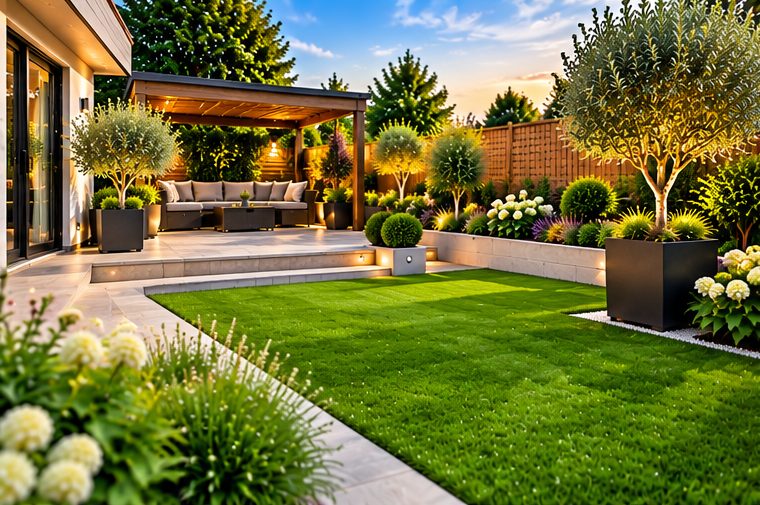
A large garden is a gift and a headache in equal measure. There is room for entertaining space, a vegetable plot, a play area and a quiet corner, but also a lot of lawn to mow, boundaries to maintain and routes to think about. Large garden landscaping succeeds when the plot is treated as a series of connected spaces rather than one big empty rectangle.
This guide looks at how to break a big garden down, what to settle before work begins, and how to phase the job to suit your budget. It is aimed at homeowners with generous plots in Worcester and around the villages and countryside of Worcestershire, Herefordshire and Gloucestershire.
The easiest way to plan a big garden is to divide it. A terrace near the house for eating and sitting, a lawn for play, a productive area further away, a wilder or wooded edge, and a quiet corner for reading all serve different purposes. Linking them with paths and changes of level creates a sense of journey and keeps the space interesting. Without zones, large plots often end up as an expanse of lawn with a patio tacked on. Walk the garden at different times of day and note where the sun falls, where the wind comes from, and where you naturally want to stop. Those observations should drive the layout.
Bigger gardens usually mean bigger groundwork problems. Heavy clay, a high water table or a slope can leave parts of the plot waterlogged for months. Before any paving or planting, look at where water collects and where it leaves. Land drains, soakaways, swales or a regrade may be needed. Machinery may be required to move soil, and you must know where services, septic tanks or soakaways already lie. If your garden is near a river or stream, take extra care with levels and drainage. Fixing these things first protects everything built afterwards, which is why a thorough survey is part of the job.
Surfaces on a large garden need to cope with distance and use. A gravel path with proper edging is economical over long runs, while paving or setts suit areas that see heavy traffic. Think about vehicles, too. If you want a drive through to a field or workshop, the base must carry weight, and turning space needs to be planned. Consider where wheelbarrows will go, how mowers reach every corner, and whether paths work in winter. Access for the build itself also matters, as lorries, diggers and deliveries all need a way in, and this can change how the work is staged.
Scale changes the planting rules. Individual shrubs look lost, so plant in groups and masses, and use trees to add structure and shade. Hedges often suit big boundaries better than fences, offering shelter and habitat, although they need cutting. Native hedgerow mixes blend well into surrounding countryside. Be realistic about upkeep: a large lawn demands regular mowing, and a big border can swallow weekends. If time is limited, simplify with fewer, larger beds, meadow areas or mulch to cut weeding. Our tree surgery side can also deal with mature trees that need work, which on big plots are often part of the picture.
Big gardens vary so much that no rule of thumb is reliable. The total depends on the area, the amount of ground to be moved or drained, the surfaces chosen, access for machinery, and how many separate features are included. Phasing helps: you might do groundworks and the main structure first, then planting and finishing touches over the following seasons. Mature trees, old buildings or overgrown areas to clear add to the scope. When you compare quotes, check that each one covers drainage, waste removal and the stages of the job, so you can see what is in and what is left out.
Contact SPR Trees and Landscapes at 6 Rose Avenue, Worcester, using the buttons on this page. Tell us about the size of the plot, what you want it to do, and any concerns such as wet ground or awkward access. We will visit, walk the garden with you and put together a sensible plan, split into stages if that suits. The visit and quotation are free.
For large garden landscaping in Worcester or the surrounding towns, call or WhatsApp 07542 451291, or use the form below and tell us about the job.
Images on this page are illustrations only.
See all Landscaping services in Worcester →
Yes, and it is often sensible. Groundworks, drainage and main paths usually come first, followed by structure, planting and finishing details. Staging spreads the cost and lets you see how the garden is used before committing to the next step.
Plan for the time you have. Fewer, larger beds, areas of meadow or mulched planting, hedges that need trimming once or twice a year, and sensible paths all reduce work. Design with upkeep in mind from the start.
Often. Bigger plots collect more water, and clay soils drain slowly. Checking where water sits, and how it can leave, avoids soggy lawns and failed paving. We look at drainage on every visit.
Tell us about the job and we will be in touch, usually the same day.
Prefer to talk? Call 07542 451291 or WhatsApp us.