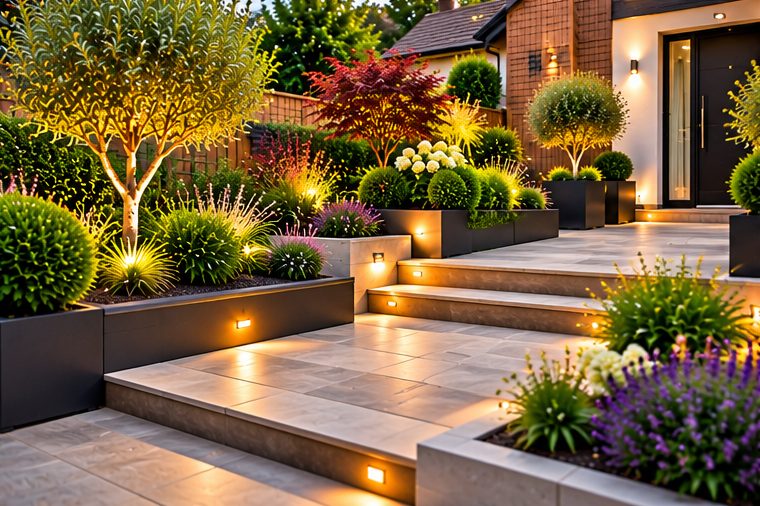
Decking and fencing are often treated as separate jobs, bought from different people and fitted at different times. In a garden that is being reworked, that can lead to awkward joins, clashing finishes and wasted effort. When Garden Decking Installation and Garden Fencing Installation are planned together, the deck, the screens and the boundary all agree with each other and with the planting around them.
This guide explains how the two fit into a wider landscape, what to decide first, and how to avoid common clashes. It is written for homeowners in Worcester and surrounding areas who are thinking about reshaping a whole garden rather than adding a single feature.
Whatever you build, the ground comes first. A deck on a level patch of garden is straightforward, but on a slope the supports need to be deeper and the structure more complex. Water must have somewhere to go, so check where the garden drains before planning a deck, and make sure fence lines do not trap runoff. Fences on the downhill side of a slope sometimes hold back soil, which can overload thin boards. Setting levels once, across the whole plot, means the deck threshold lines up with the house door, and the fence heights follow a logical line instead of creeping up and down.
Think about what the deck is for. A dining space wants sun, convenience to the kitchen and some shelter from wind. A reading corner may suit a shaded spot at the far end. Position matters for privacy as well: a raised deck can look into neighbouring windows, which may need screening or a different spot. Choose between timber and composite based on how much upkeep you want to do. Timber is cheaper to buy but needs regular treatment and slips when wet, while composite costs more at the outset and needs less care. Leave space for furniture, a barbecue and walking around.
Fences do more than mark a boundary. They provide privacy, shelter, a backdrop for planting and a way to screen bins and sheds. Closeboard is strong, panels are quick, and slatted designs give a contemporary look. Inside the garden, lower screens and trellis can divide spaces without making them feel boxed in. Think about height and light: a tall fence on the south side of a deck throws shade across it. Posts need to be set deep enough for wind, and gates should be planned where you actually walk. Boundary fences are usually your responsibility on one side only, so check ownership first.
A deck and fence built from the same kind of material or in complementary colours tie the garden together. Warm timber tones go with natural planting, while grey composite and dark slatted screens suit a modern house. Do not forget the small items: post caps, trims, fixings and gate hardware all show. Think about how the timber will age. Fresh orange-brown softwood weathers to silver unless it is treated, and it is better to choose a stain you like than to leave it to chance. Keep the palette limited to two or three materials, and let planting add the variety.
When the work is combined, the quote depends on the deck area and height, the board material, the length and height of the fence, the posts and the gates. Ground preparation, the removal of old fencing or decking, slopes and tight access change the price a lot. Doing both jobs together can save on mobilisation, since groundwork and clearing can be shared, and a single team keeps the details consistent. Compare quotes on the basis of what is included: frame, footings, fixings, disposal and finishing. A low figure often means one of these has been left out.
If you are planning a deck, a new boundary or both, get in touch with SPR Trees and Landscapes in Worcester through the buttons on this page. Tell us about your garden, what you would like to build and any problems such as slopes or old structures. We will visit, measure up and give advice on how the elements can fit together. The quotation is free and carries no obligation.
For garden decking and fencing as part of a landscape in Worcester or the surrounding towns, call or WhatsApp 07542 451291, or use the form below and tell us about the job.
Images on this page are illustrations only.
See all Landscaping services in Worcester →
Often yes, especially if the deck sits against the boundary. Doing them together lets us set levels once, share groundwork and match finishes. It can also reduce disruption, as the garden is only a building site once.
Possibly. Decks that are raised more than a set height above the ground, or that sit in certain protected areas, can need planning permission. Fence height limits also apply. Check with your local authority if you are unsure.
Neither is simply better. Timber costs less up front and looks natural but needs regular treatment. Composite needs less upkeep and lasts well, with a higher initial outlay. The right choice depends on budget, time and look.
Tell us about the job and we will be in touch, usually the same day.
Prefer to talk? Call 07542 451291 or WhatsApp us.