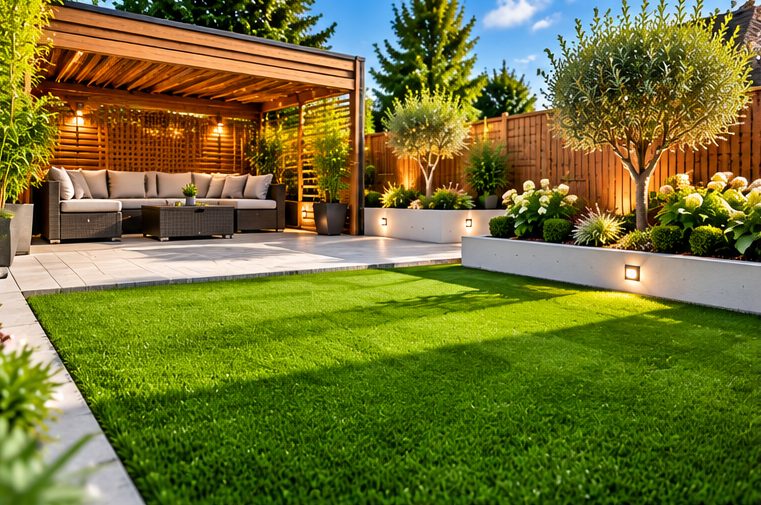
People tend to judge a synthetic lawn by the surface, yet the surface is only the last hour of the job. Most of the effort, and nearly every future problem, sits in the layers underneath. A thin base, patchy compaction or badly handled edges will show up as dips, puddles and lifting corners long before the blades wear out.
This guide walks through how Artificial Grass Installation is done properly, in the order it happens on site. Whether you are comparing Artificial Lawn Installers around Worcester, Droitwich Spa or Kidderminster, or just wondering what a sensible specification looks like, you should come away knowing which questions to ask and which shortcuts to avoid. The same principles apply to Fake Grass Installation and Synthetic Grass Installation, whatever name a firm gives it.
Everything starts with removing the existing lawn and a layer of soil, so the finished surface sits level with paths and borders rather than standing proud. A membrane goes down to stop weeds, then a sub-base of compacted crushed stone is laid in layers and rolled or plated until it is firm. Over that goes a thinner bed of fine material, screeded to falls so rainwater moves away from the house. Skipping depth is the commonest shortcut. On heavy clay, which is common across parts of Worcestershire, a shallow base will hold water and settle unevenly. The base should be thicker where the ground is soft or where children, dogs and garden furniture will give it heavy use.
Edges decide whether a lawn looks tidy for years or curls up after one summer. Treated timber, plastic or concrete edging gives the turf something solid to be fixed to, and the grass is pinned or glued along it. Rolls are laid with the pile running the same way, which is why a quick look at the direction of the fibres before cutting matters. Joins use a seam tape and adhesive, and a badly bonded join is easy to spot because it shows a visible line or opens in warm weather. Curved borders and trees need patient trimming with a sharp blade, since a ragged cut cannot be hidden afterwards.
Once the grass is fixed, a kiln-dried sand or similar infill is spread and worked into the pile with a power brush. This weights the surface, helps it lie flat, and keeps the fibres standing upright. Some products need little infill and some need a lot, so follow the manufacturer's instruction rather than assuming. After installation, the lawn needs only light care: a soft brush now and then, removing leaves before they rot into the pile, and rinsing any pet waste away. Avoid dragging heavy items across the surface in the first weeks, and keep barbecues and hot items off it, since synthetic fibres can melt.
The area is the obvious starting point, but it is rarely the biggest swing. Excavation depth, the volume of spoil to be taken away, and how easily a digger or barrow can reach the garden all shape the price. Choice of grass matters, since pile height, backing and density vary a great deal between products. Extra items such as new edging, drainage fixes, tree cut-outs, steps or raised sections add time. Existing slabs or hard areas that must be broken out will change the programme. A site visit lets us measure properly and see the ground, which is why we do not give figures over the phone.
Send us the approximate size of the lawn, a note about how it is used, and anything awkward about access or levels. Tell us if you have pets or small children, if the garden is shaded or damp, and whether you already have a particular grass in mind. We will arrange a visit, measure up, and talk through the base and finish before putting anything in writing. Our quotations and advice are free, and we cover Worcester and the surrounding parts of Worcestershire, Herefordshire, Gloucestershire and north Warwickshire. If your lawn would be better served by new turf, we will say so openly.
For artificial grass installation in Worcester or the surrounding towns, call or WhatsApp 07542 451291, or use the form below and tell us about the job.
Images on this page are illustrations only.
See all Artificial Grass Installers services in Worcester →
It depends on the size of the lawn, the ground conditions and the weather. A small, easy garden may be done in a couple of days, while larger or awkward plots take longer. Wet weather can delay base work because compaction needs reasonably dry ground.
The permeable stone base is the drainage layer, and it should be sized to the ground. Free-draining soil needs little extra, while heavy clay or low spots may need additional drainage so water does not collect under the surface.
Laying over a lawn is not advised, because the turf rots and the surface sinks. A sound, level patio can sometimes be used with a shock pad, but cracked or uneven paving needs sorting first. We would want to see it before suggesting either route.
Tell us about the job and we will be in touch, usually the same day.
Prefer to talk? Call 07542 451291 or WhatsApp us.