
There's no single best natural stone for every Chipping Campden garden — the right choice depends on your budget, the style of your house, and how the space gets used. What follows is a practical rundown of the main options and where each one tends to work best.
The main options compared
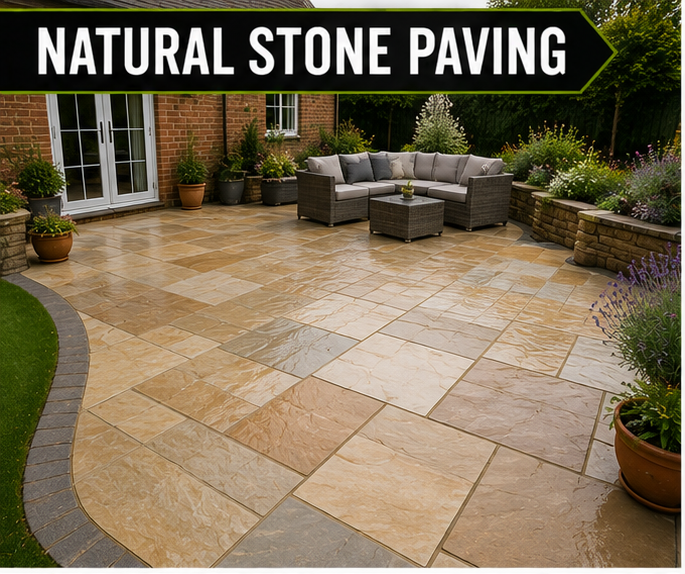
Indian sandstone is the most widely used choice locally, offering warm buff and golden tones at a more accessible price point than most alternatives, though it's a softer stone that benefits from sealing. Limestone offers a closer colour match to Cotswold stone itself, since both are limestone-family materials, and it has a smoother, more refined finish that suits formal gardens near period properties well. Yorkstone is the traditional British choice and has genuine heritage credibility for older properties, but it's harder to source, heavier to lay, and typically the most expensive of the common options.
Granite is worth considering for high-traffic areas like steps or paths near a driveway, since it's extremely hard-wearing and low maintenance, though its typically cooler grey tones need thoughtful placement so they don't clash with warmer stone walls. For most Chipping Campden gardens, a warm sandstone or limestone tends to give the best balance of appearance, cost and practicality, but a lot depends on the specific tones in your existing stonework.
Matching stone to how the space is used
Think about how the area will actually be used before choosing purely on looks. A dining patio that gets regular foot traffic and outdoor furniture benefits from a slightly textured, non-slip surface, while a path that's rarely used can justify a more delicate or premium finish. Areas near planting or under trees will pick up organic staining regardless of stone type, so darker or more variegated stone can be a practical choice for those spots, hiding marks better than pale, uniform slabs.
Get a Free Quote for Natural Stone Paving
Every garden is different — the fastest way to get an accurate answer is a quick chat with our team.