
Granite doesn't get discussed as often as sandstone or limestone for garden paving, but it has a specific place in patio and driveway design around Chipping Campden, particularly when combined with another natural stone rather than used on its own.
Where granite works well
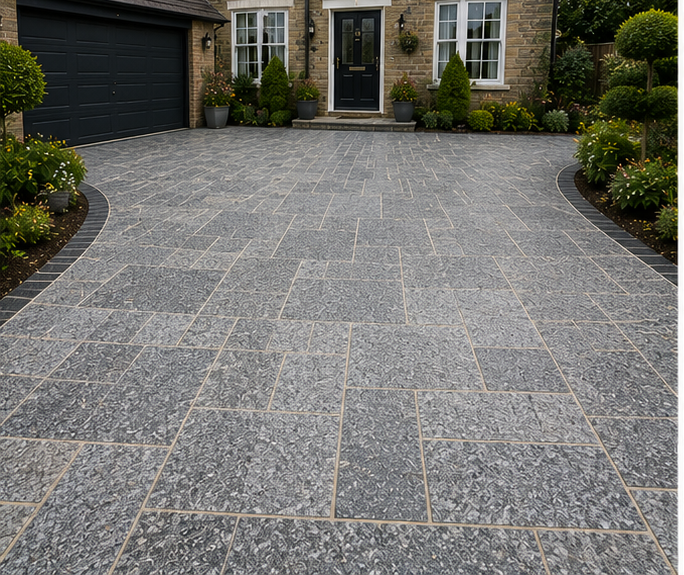
Granite is one of the hardest and most durable paving materials available, which makes it a sensible choice for areas that take heavier wear — steps, thresholds, driveway entrances, or edging strips around a softer sandstone or limestone patio. Its typically darker grey or speckled tones create a natural contrast against warmer Cotswold stone colours, which can look deliberate and smart when used sparingly as a border or feature, rather than overwhelming if used across an entire patio.
Granite setts in particular are a good option for defining the edge of a driveway or the transition between a patio and a lawn, giving a crisp, structured line that also helps contain jointing material and stop a lawn edge from creeping into loose gravel or paving over time.
Practical considerations when combining stones
When mixing granite with a warmer natural stone like sandstone, thickness and laying height need to match so the finished surface is level and safe to walk across, which sometimes means sourcing from suppliers who stock both to matching specifications. It's also worth testing a small sample of each together before committing, since granite's coolness can either provide a smart contrast or feel jarring depending on the specific tones involved — this is genuinely a case where seeing physical samples side by side matters more than looking at photos.
Get a Free Quote for Granite Paving
Every garden is different — the fastest way to get an accurate answer is a quick chat with our team.