
A brand-new patio can sometimes look a bit stark against an older Chipping Campden garden, especially in the first few months before it's had a chance to weather naturally. There are practical choices you can make at the design stage, though, that help a new patio settle in and look like it belongs far sooner.
Design choices that avoid a 'new build' look
Random or multi-size laying patterns generally look more established than a uniform grid of identical slabs, since traditional stone paving was historically laid with whatever sizes were available rather than in a repeating module. Wider joints, filled with a natural sand or a jointing compound in a muted tone rather than a stark grey, also soften the overall look considerably compared with tight, precise joints in a bright white grout. Choosing a stone with natural colour variation rather than a single flat, uniform tone helps too, since real weathered stone rarely looks completely even.
Softening the hard edges of a patio also makes a big difference — a border of low planting, moss establishing naturally in joints over time, or simply letting the edges blur slightly into the surrounding lawn or beds all help a new patio read as part of the garden rather than sitting on top of it.
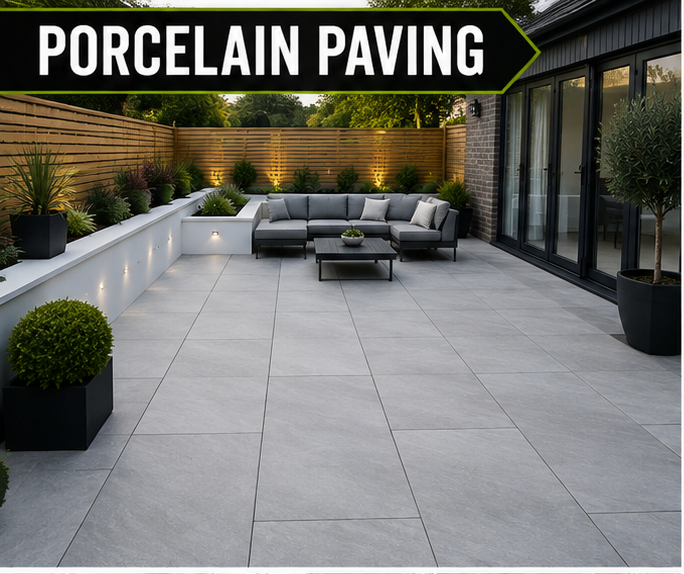
Speeding up the natural weathering process
Some contractors offer stone that's been pre-treated or lightly weathered before laying, though this is worth discussing directly with whoever supplies your stone rather than assuming it's standard. Otherwise, patience genuinely does most of the work — most natural stone patios settle in appearance within a year or two as rain, sun, and general use naturally soften the surface. Avoiding overly aggressive pressure washing in the early years also helps, since stripping a patio back to a pristine finish every year actually works against the established look most people are after.
Get a Free Quote for Patio Paving
Every garden is different — the fastest way to get an accurate answer is a quick chat with our team.