
Limestone and sandstone are both popular around Chipping Campden, and both can look excellent against period stonework, but they're genuinely different materials with different strengths. Here's how they actually compare when you're choosing between them.
Appearance and how each ages
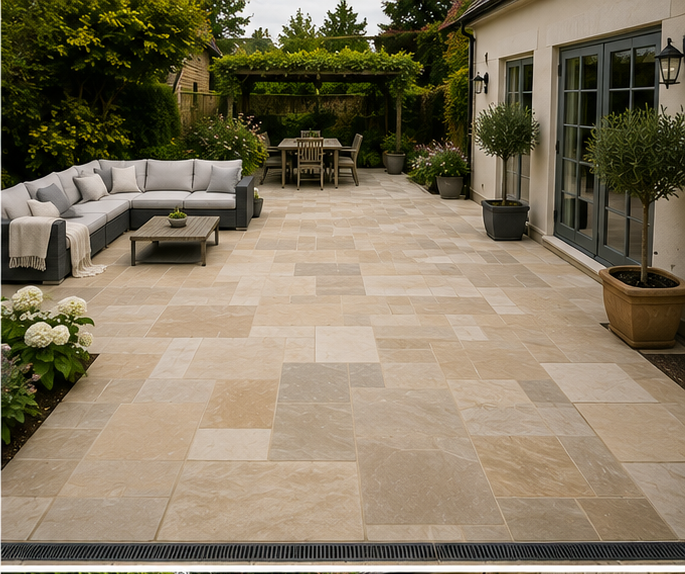
Limestone typically has a more consistent, refined appearance with subtler colour variation and a smoother texture, which can look particularly elegant against Cotswold stone since the two materials are geologically related. Sandstone tends to have more visible colour variation and a coarser, riven texture, giving a slightly more rustic, informal look. Neither is objectively better — it depends on whether you want a patio that looks polished and formal or one that looks relaxed and naturally textured.
In terms of ageing, limestone can be prone to a slight sheen or polish developing in heavily walked areas over years of use, which some homeowners like and others don't. Sandstone's rougher texture tends to hide wear more easily and generally shows less visible change over time, though both benefit from periodic sealing to manage staining and weathering.
Durability and cost differences
Sandstone is generally the more affordable option and widely available, which is part of why it's such a common choice for patios in and around Chipping Campden. Limestone typically costs more and can be slightly more susceptible to staining from acidic substances like tree sap or certain fertilisers, so it needs a bit more care if used near planting. Both are suitable for the Cotswold climate as long as they're laid on a well-drained base with proper falls, since standing water and repeated freeze-thaw cycles are what cause problems with any porous natural stone over time.
Get a Free Quote for Limestone Paving
Every garden is different — the fastest way to get an accurate answer is a quick chat with our team.