
Ledbury's black-and-white timber-framed buildings and honey-coloured stone cottages set a fairly high bar for anything new added to a garden. Indian sandstone has become one of the most popular choices for patios in the town, and there's good reason for that when it's matched sensibly and thoughtfully to a period property and its surroundings.
Why it tends to suit older properties
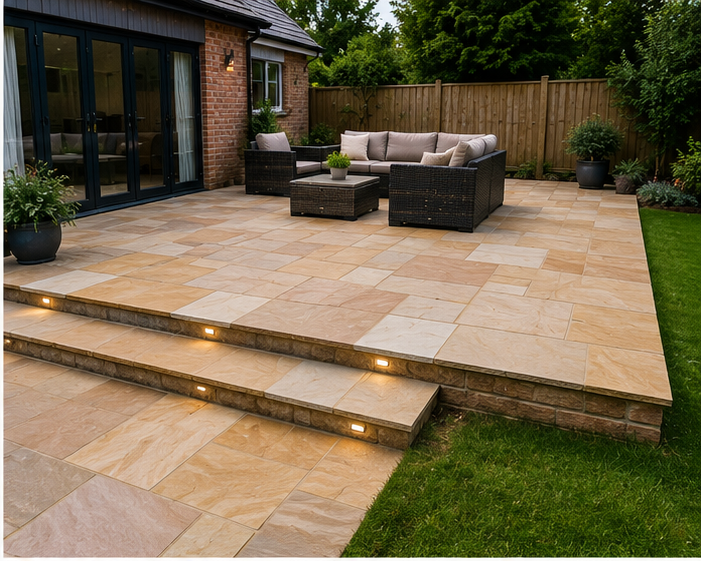
Indian sandstone comes in natural, riven finishes with genuine colour variation — buffs, browns, greys and mixed multicolour blends — which tends to sit comfortably next to old brick, timber framing and cottage-garden planting in a way that a very uniform, machine-made material can look out of place against. The riven (rippled) surface texture also has a handmade, worn-in quality that suits a period setting better than a dead-flat finish.
That said, suitability isn't automatic. A very pale, evenly-coloured sandstone can look stark against weathered brick, while a darker multicolour blend or a fossil/buff mix often reads as more in-keeping. It's worth asking to see full-size sample slabs, not just a photo, laid near your actual walls and existing hard landscaping before deciding, since colour can shift a lot in different light.
Practical considerations for period gardens
Older Ledbury properties, particularly those near the town centre or on the surrounding hillsides, often have uneven ground, established trees, or listed status that affects what changes you can make. Sandstone is a good, flexible material to work with here because it can be cut and shaped around existing features, and a calibrated, riven finish handles gentle level changes reasonably well. If your property is listed or in a conservation area, it's worth checking with the local planning team before major works, though patio paving itself is rarely an issue.
It's also worth thinking about how the paving pattern is laid, not just the stone itself. A random, coursed layout using mixed slab sizes tends to look more in keeping with an older cottage garden than a rigid grid of identical squares, echoing the informal, hand-laid character of traditional stone paths and yards. Edging choices matter too — a soft, planted border or reclaimed brick edge generally suits a period property better than a stark, straight-cut concrete kerb.
Get a Free Quote for Indian Sandstone Paving
Every garden is different — the fastest way to get an accurate answer is a quick chat with our team.