
With so many period cottages and farmhouses around Ledbury, a lot of homeowners want a patio that looks like it's always belonged there rather than something obviously new. Natural stone is usually the starting point for that look, but which stone works best depends on the setting and how the space will be used.
Sandstone and limestone as the classic choices
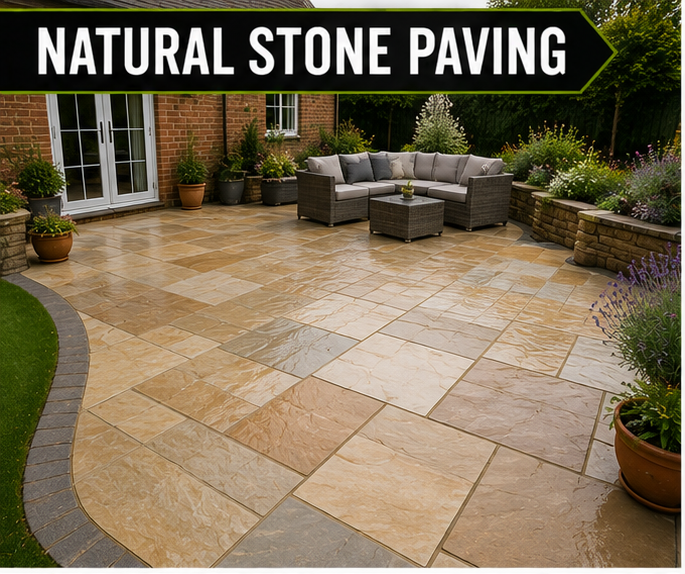
Indian sandstone is the most popular all-rounder for traditional gardens — it's available in warm, varied tones that sit well against old brick and timber, it's reasonably priced relative to other natural stones, and its riven texture gives a handmade look. Limestone offers a smoother, more even finish with cooler grey and buff shades, which can suit a slightly more refined cottage garden or a period property with grey stone or render, though it tends to show algae and staining if not sealed and maintained.
For a real farmhouse or period cottage look, reclaimed or aged-finish stone (real or a convincing tumbled/aged sandstone) can work particularly well, as it avoids the very crisp, new-cut edges that can make a patio look freshly dropped into an old garden. Mixed-size, random-pattern laying also tends to suit traditional settings better than a rigid grid of uniform slabs.
Matching stone to the rest of your garden
It's worth looking at what's already there — old brick paths, dry stone walling, existing garden walls — and choosing a stone tone that complements rather than fights with it. A warm buff or multicolour sandstone generally pairs well with red brick, while a grey limestone or granite sits better against render or grey stone. Getting sample slabs out into your actual garden light before committing is the best way to avoid a mismatch that only becomes obvious once it's laid.
Planting can also help tie a new patio into an established garden. Softening the edges with lavender, low box hedging or self-seeding cottage plants like alchemilla and geraniums helps a natural stone patio settle in visually much faster than paving left with hard, bare edges. Leaving planting gaps or a narrow border within the design at the outset, rather than trying to add them afterwards, tends to give the most natural-looking result in a traditional Ledbury garden.
Get a Free Quote for Natural Stone Paving
Every garden is different — the fastest way to get an accurate answer is a quick chat with our team.