
Limestone and sandstone are both popular natural stone choices for Ledbury patios, and they're often compared side by side because they occupy similar price territory but look and behave quite differently. Here's how to weigh them up for your own garden.
Appearance and finish
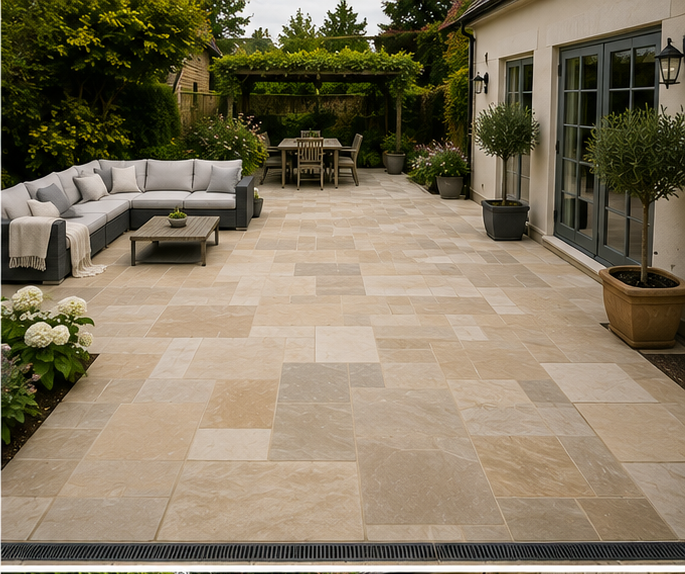
Sandstone typically has more visible colour variation — golds, browns, greys and mixed multicolour blends with a riven, slightly textured surface. It reads as warm and informal, which is why it suits cottage gardens and period brick properties so well. Limestone tends to be more even in tone, often in cooler greys, blue-greys or buffs, with a smoother, denser surface that can look slightly more formal and contemporary, though it's still very much a natural stone with genuine character.
Neither is objectively better — it comes down to what suits your property and personal taste. A warm stone cottage or red-brick Victorian terrace in Ledbury often leans toward sandstone, while a property with grey stone, render or more modern architecture can suit limestone's cooler, more uniform look.
Durability and maintenance differences
Limestone is denser and less porous than most sandstone, which generally makes it more resistant to staining and frost damage, but some limestones can be prone to a white efflorescence (a natural salt residue) in the first year or two, which usually washes away with rain and cleaning. Sandstone is a little softer and more porous, so it benefits from sealing to reduce staining and algae growth, particularly in shaded, damp corners of a garden — something to bear in mind given how much rain Herefordshire gets through autumn and winter. Both are hard-wearing when installed properly with a solid sub-base and correct falls for drainage.
Budget-wise the two are often fairly close, though exact pricing varies by specific product, thickness and finish, so it's worth comparing like-for-like quotes rather than assuming one is automatically cheaper. If you're undecided, think about where the patio sits in relation to sun and shade — a north-facing or heavily shaded spot that stays damp for longer will show algae and staining faster on either stone, and may benefit more from limestone's slightly denser surface or a good sealing routine regardless of which you choose.
Get a Free Quote for Limestone Paving
Every garden is different — the fastest way to get an accurate answer is a quick chat with our team.