
Porcelain paving has grown fast in popularity over the last few years, and it's a question we get asked often around Ledbury: does something so contemporary actually suit a period cottage or a house near the town's historic centre? The answer is more nuanced than a straight yes or no.
Where porcelain works well
Porcelain is manufactured, so its colour and surface are consistent slab to slab, and it now comes in ranges designed to mimic natural stone, weathered limestone and even aged sandstone fairly convincingly. On a Victorian or Edwardian property with cleaner lines, or a more modern extension added to an older house, a stone-effect porcelain in a warm grey or buff tone can look very much at home and gives you a low-maintenance, durable surface that copes well with our wet Herefordshire winters.
Where it can look wrong is on very old, characterful cottages with irregular stonework and organic textures — a perfectly flat, uniform porcelain slab right up against rough natural stone walls can create a jarring contrast that a riven natural stone wouldn't. It's not that porcelain can't be used there, but the specific range and colour matter more than usual, and mixing borders or edging in a natural stone can help soften the transition.
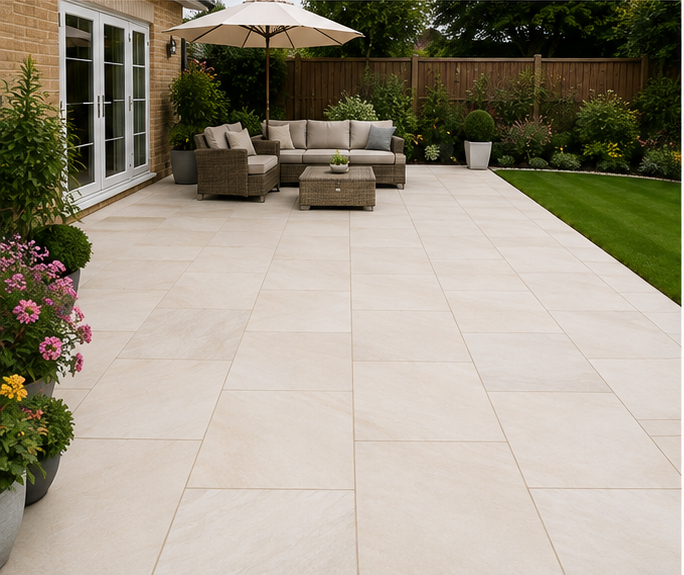
Practical benefits worth weighing up
Porcelain is very low-porosity, which means it resists staining, moss growth and frost damage better than most natural stones, and it rarely needs sealing. For a busy family garden or a low-maintenance rear patio on an older property, that practicality can outweigh a small aesthetic compromise. The honest advice is to view sample slabs against your actual walls and existing paving before deciding, rather than choosing from a photo alone.
Thickness and finish also matter more than people expect. Outdoor porcelain paving is typically made in a thicker, 20mm format specifically for exterior use, which is more robust than the thinner indoor tiles some people picture when they hear the word porcelain. Textured, stone-effect ranges with irregular edge detailing tend to blend better with an older property's existing hard landscaping than a very sharp-edged, glossy tile, so it's worth being specific with your supplier about the look you're after.
Get a Free Quote for Porcelain Paving
Every garden is different — the fastest way to get an accurate answer is a quick chat with our team.