
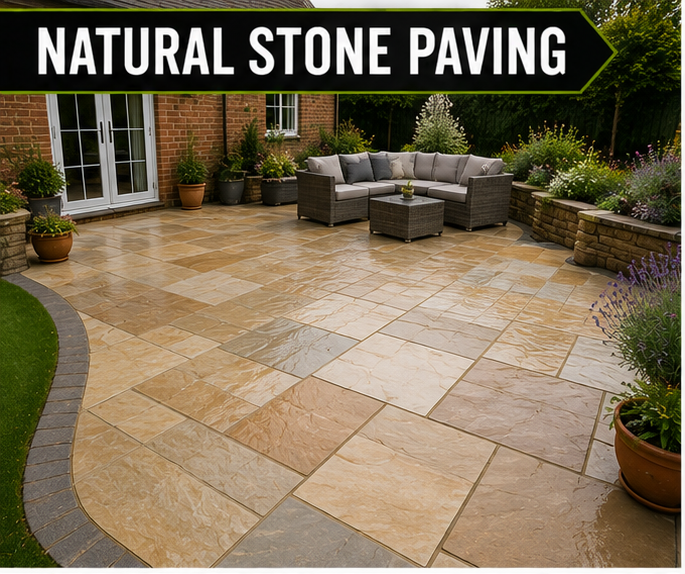
Natural stone is often chosen for Pershore patios precisely because it's built to last, but exactly how many years you get out of it depends on more than just the stone itself. The type of stone, how it was laid, and how it's looked after all play a part.
What determines the lifespan
Denser stones such as granite and porphyry are naturally more resistant to wear, frost and staining, and can realistically last a lifetime with minimal attention. Softer, more porous stones like some sandstones and limestones are still very durable but benefit from a bit more care, such as periodic sealing, to keep them performing well over decades rather than years. In every case, though, the quality of the installation underneath the stone matters just as much as the stone itself.
A patio laid on a well-compacted, correctly drained sub-base with proper falls to shed water will comfortably outlast one laid on a shallow or poorly prepared base, regardless of how premium the stone is. Most problems that shorten a natural stone patio's life — sinking, cracking, frost damage — trace back to groundwork issues rather than the stone wearing out.
Simple habits that add years
Keeping joints free of weed growth, clearing leaves before they rot down and stain the surface, and dealing with moss before it takes hold all help. In a town like Pershore, where gardens often back onto mature trees and the Avon floodplain keeps things damp, good drainage away from the patio edges is particularly worth getting right at the design stage.
Get a Free Quote for Natural Stone Paving
Every garden is different — the fastest way to get an accurate answer is a quick chat with our team.