
Limestone's soft, even tones make it a natural fit for the traditional cottage and Georgian-influenced gardens found around Pershore. If you're weighing it up for your own patio, it helps to think about how the colour and finish will work with your planting and existing brickwork before settling on a design.
Choosing colours that suit the setting
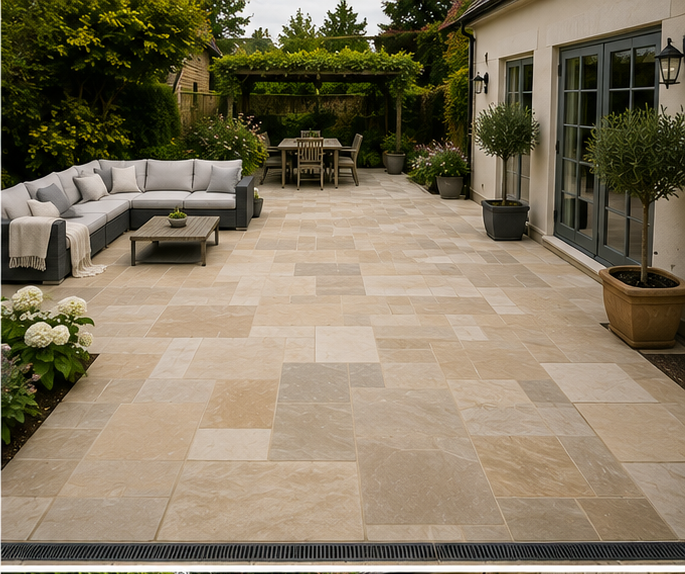
Limestone typically comes in creams, soft greys and honey tones, which tend to sit well against mellow Worcestershire brick and traditional planting schemes. A lighter buff or cream limestone can brighten a shaded garden and make a smaller courtyard feel larger, while cooler grey tones work well as a calmer backdrop to colourful borders. It's worth viewing a physical sample outdoors, in your own garden light, before committing, since limestone can look noticeably different in a showroom than it does under an overcast Worcestershire sky.
Layout and finishing touches
A single large-format limestone patio near the house, with a narrower matching path leading down the garden, is a popular approach that gives a sense of flow without overcomplicating the design. Consider a contrasting border of darker setts or brick to frame the patio edge, which works particularly well against limestone's paler tones. If the garden has an outbuilding or an established boundary wall, a limestone patio positioned to catch afternoon sun makes the most of the space for sitting out.
Get a Free Quote for Limestone Paving
Every garden is different — the fastest way to get an accurate answer is a quick chat with our team.