
Porcelain paving comes up a lot when homeowners in Stourport-on-Severn ask about low-maintenance options, and it's easy to see why once you understand how the material behaves compared with natural stone. It isn't automatically the right choice for every garden, but its low porosity does genuinely reduce day-to-day upkeep. SPR Paving lays a fair amount of it and can talk through whether it suits your particular space.
What makes porcelain lower maintenance
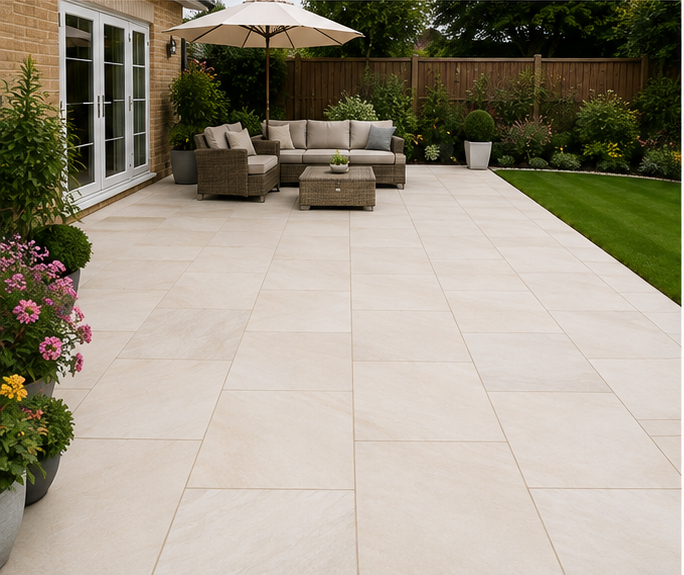
Porcelain is manufactured at extremely high temperatures, which makes it very dense and non-porous compared with natural stone like sandstone or limestone. That density means it barely absorbs water, so it resists staining from things like red wine, oil, or bird droppings far better than porous stone, and algae has less of a foothold because moisture doesn't soak in. Colours are also fired through the tile, so fading and wear patterns are less noticeable over years of use than with some natural materials.
It's worth being realistic, though. Porcelain still needs occasional sweeping and an outdoor cleaner to shift surface dirt, and grout or jointing lines can still collect grime if not maintained. It performs best when installed correctly on a proper full-bed mortar or approved system, since incorrect laying is the main cause of cracked or lifting porcelain, not the material itself.
When natural stone might still make more sense
If you want the variation and character of natural stone, such as the tonal differences in sandstone or the texture of granite, porcelain's uniform finish won't give you that look. It also tends to cost more per square metre than mid-range natural stone, so budget and the aesthetic you're after both play into the decision alongside maintenance.
For a garden that's mostly shaded, backs onto trees, or is used heavily by children and pets, the reduced staining and easier cleaning of porcelain often make the extra upfront cost worthwhile over several years. For a more traditional-looking cottage garden, however, many homeowners still prefer the character natural stone brings, even knowing it needs a bit more looking after.
Getting the installation right
Whichever material you choose, the finish and long-term performance come down to the sub-base and bedding as much as the paving itself. Porcelain in particular needs a full mortar bed rather than the spot bedding sometimes used for concrete flags, since its rigidity means any voids underneath can lead to cracking under point loads such as furniture legs or a step from a heavy boot.
Get a Free Quote for Porcelain Paving
Every garden is different — the fastest way to get an accurate answer is a quick chat with our team.