
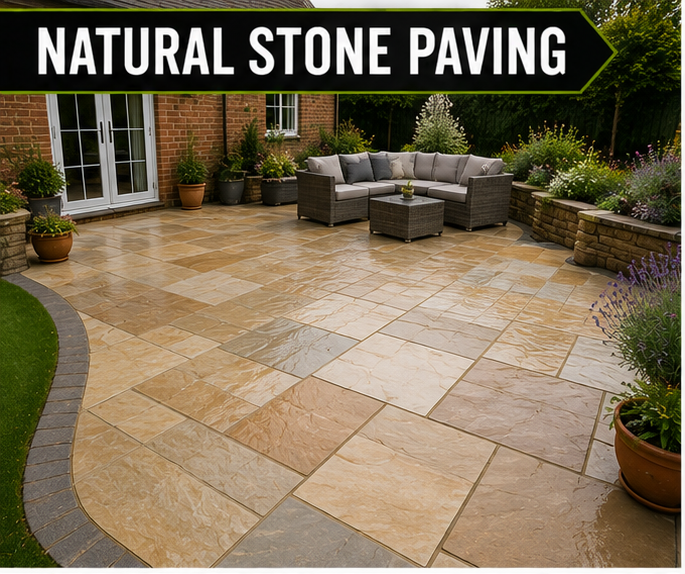
Natural stone paving is a popular choice for gardens in Stourport-on-Severn thanks to its character and durability, but it isn't entirely maintenance-free. How much upkeep it needs depends on the stone type, where it's laid, and how it was installed in the first place. SPR Paving fits a range of natural stone and always talks customers through what ongoing care looks like.
What routine maintenance actually looks like
Most natural stone needs periodic sweeping to clear debris, an occasional wash to remove surface grime, and treatment for algae or moss in shaded, damp spots. Porous stones like sandstone and limestone absorb more moisture than granite, so they're more prone to staining and organic growth if left unattended for long periods. Sealing isn't essential but does reduce how much water and dirt the stone soaks up, meaning less frequent cleaning is needed between treatments.
Jointing between slabs also needs occasional attention. Traditional mortar joints can crack over time and let weeds or moss establish, while modern resin-bound jointing tends to stay stable for longer with less upkeep. Checking joints once or twice a year and repointing any that have failed keeps water from getting underneath the slabs, which is important for preventing movement or frost damage over winter.
Why installation quality matters more than the stone itself
A lot of the maintenance issues people associate with natural stone actually stem from poor laying rather than the material. Inadequate falls that leave water pooling, insufficient bedding that allows slabs to rock, or a sub-base that wasn't properly compacted all create problems that no amount of cleaning will fix. Getting the groundwork right at the start genuinely reduces how much maintenance the patio needs for years afterwards.
It's a similar picture for gardens near the Severn, where higher ground moisture and occasional flooding risk mean drainage matters even more than usual. A patio laid with the right falls and a free-draining sub-base copes far better with these conditions than one laid on the cheap, and that difference shows up in how much upkeep it needs over the following years.
A simple seasonal routine
For most natural stone patios, a light brush in autumn to clear fallen leaves, a wash down in spring, and a quick check of the joints once a year is genuinely enough to keep things looking good. Tackling small issues, a cracked joint, a patch of early algae, as soon as they appear tends to be far less work than leaving them to build up over a full season.
Get a Free Quote for Natural Stone Paving
Every garden is different — the fastest way to get an accurate answer is a quick chat with our team.