
Granite is often recommended for driveways, paths, and busy patio areas around Stourport-on-Severn because of how tough it is compared with softer stones. If you're weighing it up for a high-traffic space, it's worth understanding why it holds up so well and where it still has limits. SPR Paving works with granite regularly for exactly this reason.
What makes granite well-suited to heavy use
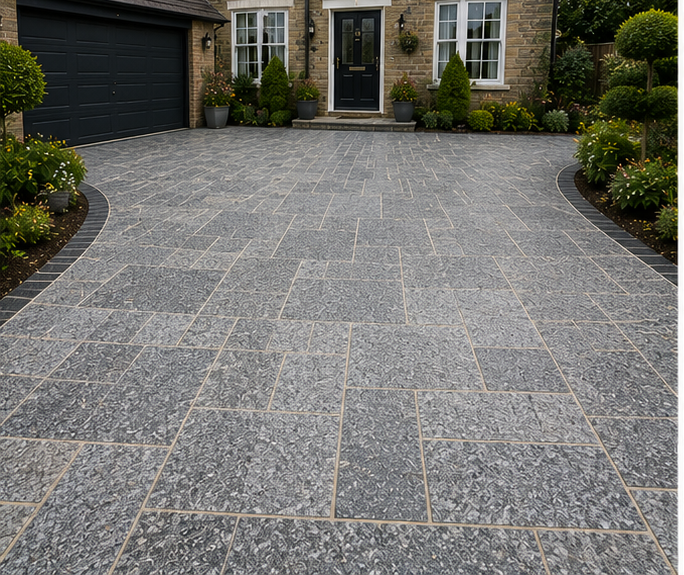
Granite is one of the hardest and least porous natural stones commonly used in paving, which means it resists scratching, chipping, and staining far better than sandstone or limestone. That low porosity also makes it more resistant to frost damage, since it absorbs very little water that could freeze and crack the surface over winter. For driveways, paths to the front door, or patio areas that see a lot of foot traffic, that combination of hardness and durability means it keeps its appearance for longer with less visible wear.
It also handles pressure washing and general cleaning well without the surface degrading, which matters in areas that pick up more dirt from regular use, such as a path used daily rather than an occasional-use seating area.
Things worth considering before choosing it
Granite tends to sit at the higher end of the price range compared with concrete or standard sandstone, reflecting both the material cost and the fact it's harder to cut and work with on site. A smooth or polished granite finish can also be slippery when wet, so for paths and driveways a flamed or textured finish is generally the better choice for grip. As with any paving, correct installation with a solid, well-compacted sub-base is essential to get the durability benefits the stone is capable of.
Weight is another practical consideration, granite setts and slabs are heavier and denser than most other paving materials, which can make handling and cutting on site slower and adds a little to labour costs. That's usually a worthwhile trade-off for a driveway or entrance path that needs to cope with cars, bins, and daily footfall for decades to come.
Comparing it to other high-traffic options
Against block paving or concrete flags, granite generally wins on longevity but loses on upfront cost, while against porcelain it's more scratch and impact resistant but usually costs a bit more too. Which makes the most sense depends on budget, how the area will be used day to day, and how long you want the surface to look good with minimal intervention.
Get a Free Quote for Granite Paving
Every garden is different — the fastest way to get an accurate answer is a quick chat with our team.