
Older patios around Stourport-on-Severn, especially those laid decades ago on a thin bed of sand or mortar, often reach a point where patching them up no longer makes sense. Knowing the difference between cosmetic wear and a genuine structural problem can save you spending money on repairs that won't last. SPR Paving regularly gets called out to assess patios that are somewhere between the two.
Signs it's more than just a clean-up job
Individual slabs that rock or move underfoot are usually a sign the bedding beneath has failed or washed out, and this tends to get worse over time rather than settle down on its own. Cracked slabs, especially several in the same area, often point to a sub-base that was never properly compacted or wasn't deep enough in the first place, meaning ground movement is transferring stress straight into the paving. Persistent pooling of water in the same spots after rain, even after cleaning, usually means the fall was wrong from the start rather than something that can be brushed or jet-washed away.
Weeds or moss pushing up consistently through joints, even after repointing, often means the jointing material has broken down more widely than it appears on the surface, letting water and seeds get underneath. If several of these issues are showing up together rather than in isolation, it's usually more cost-effective in the long run to relay the patio properly than to keep repairing individual problem areas.
When a repair is genuinely enough
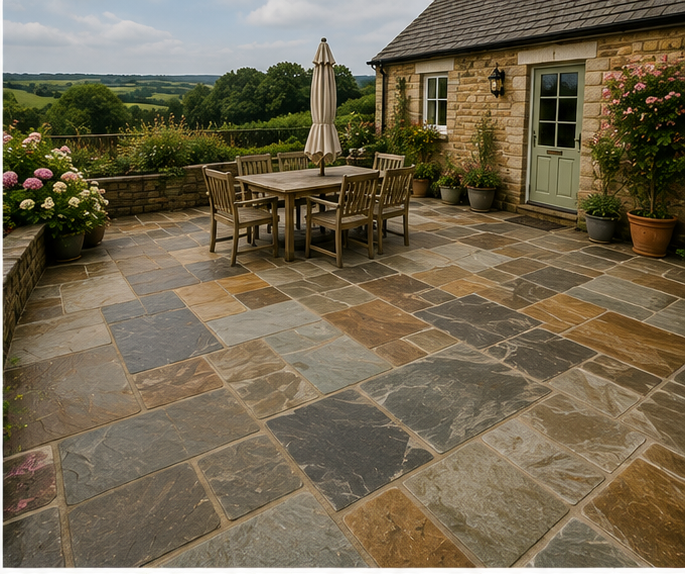
Not every issue means starting again. A few loose slabs in an otherwise sound patio can often be lifted, rebedded, and relaid without touching the rest of the area. Surface staining, algae, or faded colour, however unsightly, is typically a cleaning and maintenance issue rather than a structural one. The key is figuring out whether the problem is isolated or a sign that the whole base has failed, which is usually easier to judge with an experienced eye on site than by guesswork.
Getting an honest assessment
If you're unsure which category your patio falls into, it's worth getting someone to take a proper look rather than assuming the worst or ignoring it and hoping it settles down. A short site visit is usually enough to identify whether the issues are cosmetic, isolated, or a sign the whole patio needs relaying, and that assessment should always come before any decision about spending money on repairs or a full replacement.
Get a Free Quote for Patio Paving
Every garden is different — the fastest way to get an accurate answer is a quick chat with our team.