
With Upton upon Severn's riverside setting bringing plenty of rain and damp mornings, slip resistance is a genuine concern for anyone considering porcelain paving for a patio, path or pool surround. The short answer is that it depends entirely on the finish, not the material itself, and outdoor porcelain paving is a very different product from the polished tiles used indoors. SPR Paving always talks customers through slip ratings before they commit to a particular tile.
Why finish matters more than the material
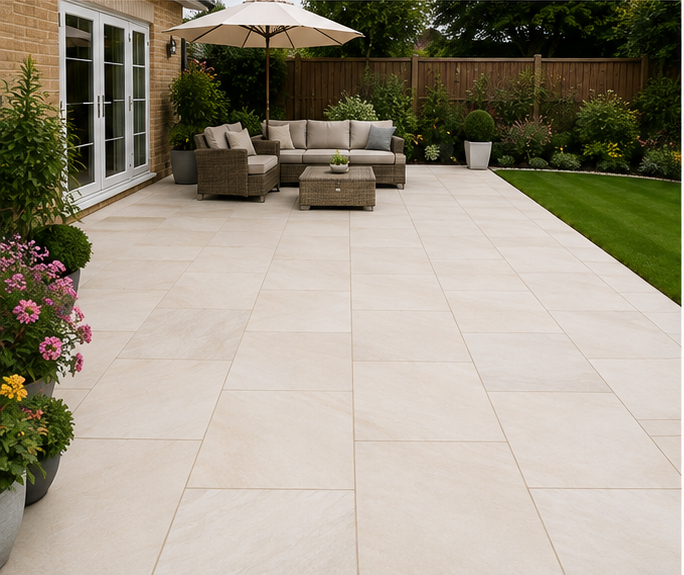
Outdoor porcelain paving is manufactured with a textured, matt or structured surface specifically to provide grip, and reputable ranges come with a published slip resistance rating, usually shown as an R-value or a pendulum test result. Anything intended for external use should meet a recognised standard for wet-area safety. Polished or gloss porcelain, by contrast, is designed for indoor floors and should never be used outside, since it becomes genuinely hazardous once wet.
It's worth asking your supplier or installer to show you the slip rating for the specific product you're choosing rather than assuming all porcelain performs the same way. Darker colours and textured finishes generally offer a bit more visual grip too, though the technical rating is the reliable measure to go by.
Keeping it safe once it's laid
Even a well-rated porcelain surface benefits from regular cleaning, since a build-up of algae, moss or general grime reduces grip over time regardless of the underlying texture. Sweeping leaves away promptly and giving the patio an occasional wash, particularly in shaded or north-facing areas of an Upton upon Severn garden, keeps the surface performing as intended year-round.
Get a Free Quote for Porcelain Paving
Every garden is different — the fastest way to get an accurate answer is a quick chat with our team.