
Limestone is a beautiful, popular choice for patios around Upton upon Severn, prized for its pale, even tones, but its porous nature means sealing is usually recommended rather than optional. Left untreated, it's more vulnerable to staining and weathering than people often expect. SPR Paving generally advises sealing limestone shortly after installation and keeping on top of it afterwards.
Why sealing matters for limestone specifically
Limestone is more porous than sandstone or granite, which means it absorbs moisture, dirt and organic matter more readily. Without a sealant, this can lead to staining from spilled drinks, plant matter or general garden dirt, as well as making the stone more prone to algae and moss growth in shaded, damp spots. A good quality sealer designed for natural stone reduces water absorption significantly, making the surface easier to clean and helping protect its colour, particularly on the lighter, more popular limestone tones where staining shows up most.
It's worth sealing after the patio has been laid and allowed to dry out fully, and again after any deep clean, since cleaning products and pressure washing can strip away previous sealant. Choosing a breathable sealer matters too — one that lets moisture escape from beneath the stone rather than trapping it, which can otherwise cause problems in wet British winters.
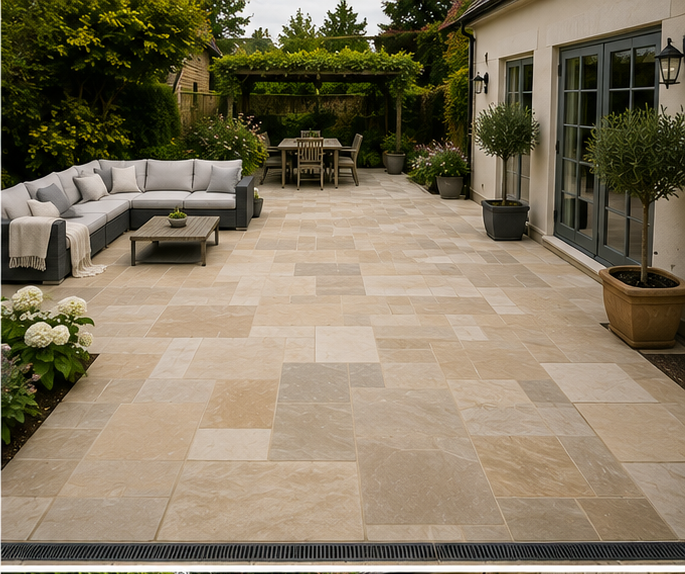
What happens if you skip it
Unsealed limestone will still function perfectly well as a patio, but it's likely to show staining and general weathering more visibly over time and will need more intensive cleaning to keep it looking presentable. Many homeowners find the modest cost and effort of sealing is worthwhile simply because it makes ongoing maintenance so much easier.
Get a Free Quote for Limestone Paving
Every garden is different — the fastest way to get an accurate answer is a quick chat with our team.