
Granite is one of the toughest natural stones available, and it works particularly well for paths and steps in Upton upon Severn gardens, many of which have some slope to manage given the town's position near the river. Its strength and slip resistance make it a sensible choice where safety and hard wear matter most. SPR Paving uses granite regularly for exactly this kind of application.
Why granite suits paths and steps well
Granite is extremely dense and hard-wearing, which means it resists chipping, cracking and wear from repeated foot traffic far better than softer stones. For steps specifically, that durability matters because edges and nosings take the most punishment over years of use. Granite also holds up well to weathering and doesn't degrade in the way some softer sedimentary stones can, making it a genuinely long-term choice for outdoor circulation routes.
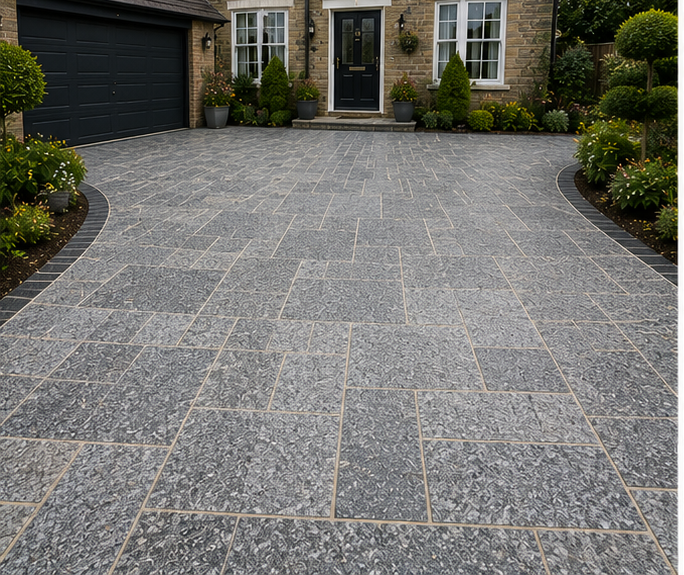
For safety, textured or flamed-finish granite gives good underfoot grip even when wet, which is an important consideration for steps in particular. Darker granite tones can also help define the edge of a step visually, which is a useful safety feature in low light or when there's a change in level that isn't otherwise obvious.
Practical considerations when using it
Granite's density makes it heavier to handle and, being one of the hardest natural stones, it can be more involved to cut precisely for bespoke step profiles, which is worth factoring into planning and cost. It's a material that rewards careful setting out, particularly on sloping gardens where step rise and going need to be consistent for safety and comfort.
Get a Free Quote for Granite Paving
Every garden is different — the fastest way to get an accurate answer is a quick chat with our team.