
Indian sandstone is one of the most popular patio materials in the country, and it's a common sight in gardens around Stow-on-the-Wold, where a lot of properties have a traditional cottage-garden feel. It works well in this setting, but it's worth knowing its strengths and its limits before committing. SPR Paving lays a good deal of it locally, so here's what actually matters.
Why it suits traditional settings
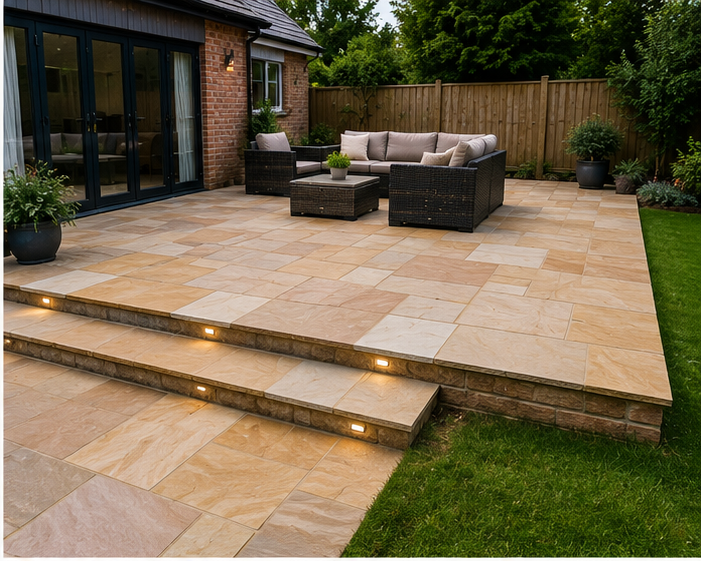
Sandstone has natural colour variation, riven texture and irregular edges that sit comfortably next to Cotswold stone walls, old brickwork and established planting. Because it's a natural stone rather than a manufactured product, no two slabs are quite identical, which suits gardens that are meant to look settled rather than brand new. Colours like autumn brown, buff and grey-green all work well against the honey-toned stone common in this part of Gloucestershire.
It's also a practical choice for family gardens. Riven sandstone has a naturally textured surface that gives reasonable grip when wet, and it's forgiving of minor knocks, so it holds up to everyday use around a house without looking precious.
What to watch out for
The main downside is porosity. Sandstone absorbs water more readily than denser stones like granite or porcelain, which can lead to staining from leaf litter, moss growth in shaded, damp corners, and gradual weathering over the years. A quality sealer applied after laying, and reapplied periodically, cuts down on staining and makes cleaning easier. It's also worth choosing a reputable supplier, since sandstone quality varies and cheaper batches can be inconsistent in thickness or prone to flaking.
Get a Free Quote for Indian Sandstone Paving
Every garden is different — the fastest way to get an accurate answer is a quick chat with our team.