
Block paving is usually associated with driveways, but it has a place in traditional gardens too, particularly for paths, parking areas and transitional spaces around older properties in and near Stow-on-the-Wold. Getting the colour and laying pattern right is what stops it looking like a modern add-on. SPR Paving fits a fair amount of it locally, and there are some clear do's and don'ts.
Colours and patterns that suit period properties
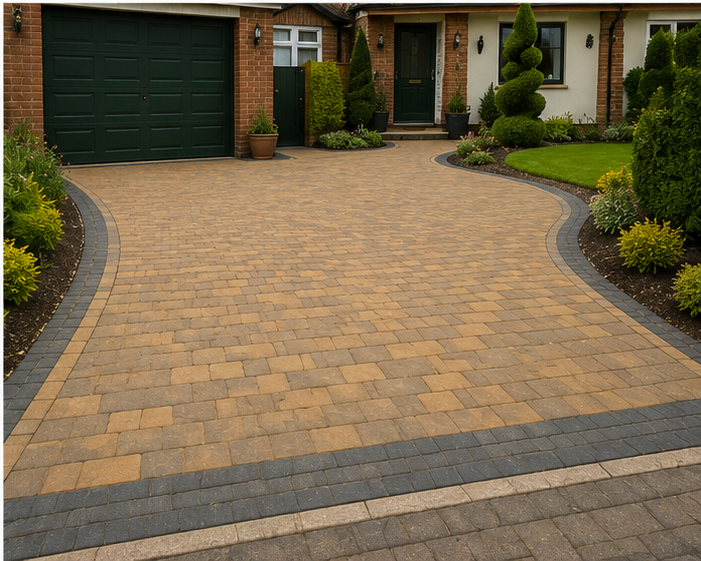
For a traditional setting, muted, natural tones such as buff, autumn or charcoal-grey blends tend to work better than bright reds or heavily mixed multi-colour blocks, which can look out of place against Cotswold stone. A herringbone pattern is the classic choice and reads as traditional and hard-wearing, while a simple stretcher bond can suit a narrower path. Reclaimed-style or tumbled block finishes, which have slightly worn, rounded edges, also help new paving blend in more quickly rather than looking freshly laid for years.
Edging matters as much as the blocks themselves. A contrasting border course, or edging that matches existing stone walls and steps, ties the new paving into the rest of the property rather than leaving it looking like a separate patch.
Where block paving works well
It's a strong option for driveways, parking areas, and paths that need to take regular foot or vehicle traffic, since individual blocks can be lifted and replaced if one is damaged rather than needing a whole section redone. It's less commonly used for the main seating patio in a period garden, where natural stone or a stone-effect porcelain is usually the better visual fit, but it works well used alongside those materials as a practical, durable surface elsewhere in the garden.
Get a Free Quote for Block Paving Driveways
Every garden is different — the fastest way to get an accurate answer is a quick chat with our team.