
It's a common point of confusion: granite is actually a type of natural stone, so the real comparison homeowners in Stow-on-the-Wold usually mean is granite versus other natural stones like sandstone or limestone. Each has a different character, and understanding the difference helps you pick the right one for your garden. SPR Paving can bring samples out on a site visit so you can see the difference in person.
How granite differs from sandstone and limestone
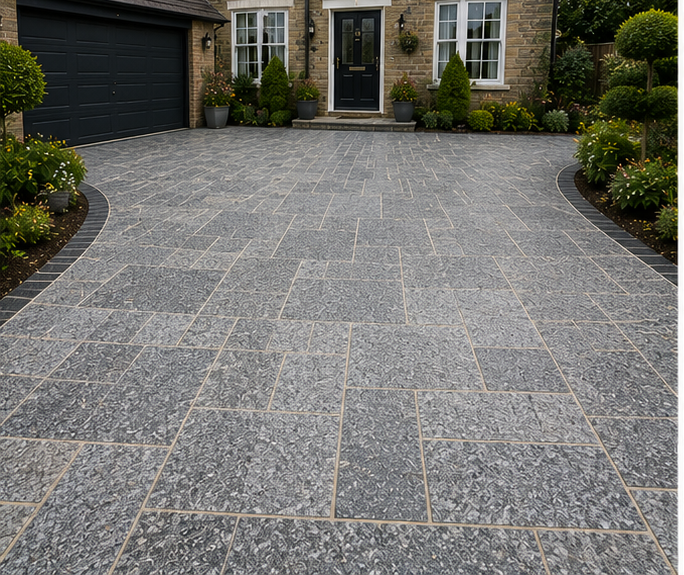
Granite is a much denser, harder stone than sandstone or limestone, which makes it more resistant to staining, scratching and frost damage with less need for regular sealing. Visually, it tends to have a more uniform, speckled appearance with less of the colour banding and texture variation you get in sandstone, giving it a slightly more contemporary look even in traditional dark greys or silvers. Limestone and sandstone, by contrast, generally offer warmer tones and more natural texture, which is why they're often chosen to closely match Cotswold stone walls.
In terms of cost, granite typically sits at a similar or slightly higher price point than sandstone, reflecting the extra processing needed to cut and finish such a hard material, though this varies by supplier and finish.
Which suits a Cotswold garden better
There's no single right answer — it depends on the look you want. If you want paving that blends closely with existing Cotswold stonework, limestone or sandstone are usually the closer visual match. If you want something a bit more contemporary, low-maintenance, and hard-wearing, granite is a strong option, and darker granite tones can look striking used as a contrast alongside lighter stone walls and features.
Get a Free Quote for Granite Paving
Every garden is different — the fastest way to get an accurate answer is a quick chat with our team.