
With black-and-white timber-framed buildings, Georgian brick townhouses and more modern homes all sitting within a short distance of each other, Leominster doesn't have a single architectural style, which means there's no single right paving choice either. The best result comes from thinking about what already surrounds the house rather than picking a material in isolation. SPR Paving can talk through options once we've seen the property.
Reading the cues your property already gives you
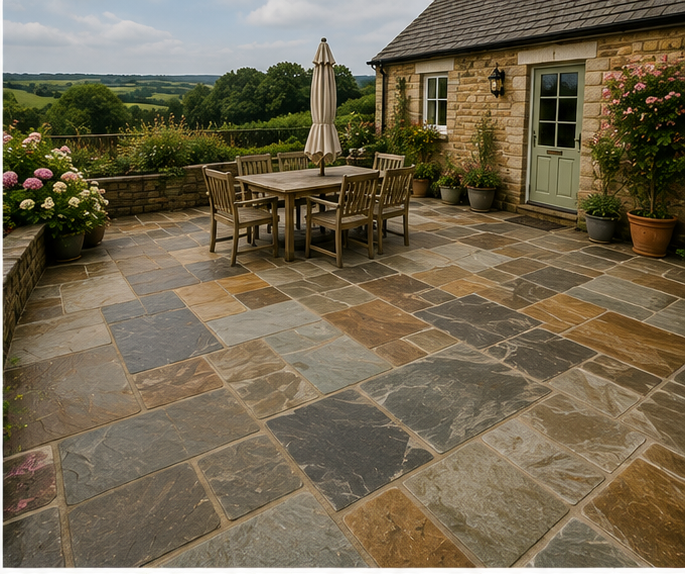
Existing materials on the house and boundaries are the best starting point — brick, render, stone walling, timber framing and roof colour all give clues about what will sit comfortably alongside a new patio. Warm-toned Indian sandstone or a buff limestone generally suits older brick and timber-framed properties well, echoing the natural materials already present, while a more contemporary render-and-glass extension often looks better with a smoother porcelain or granite finish in a grey or charcoal tone. It's less about matching exactly and more about not creating a jarring contrast.
Boundary features matter too — stone walling, hedging or timber fencing all set a tone for the garden that a patio should work with rather than against. A property close to Leominster's older town centre, for example, often has more traditional boundary materials than a newer estate on the edge of town, and that context is worth considering alongside the house itself when narrowing down paving options.
Practical touches that tie a patio into the property
Beyond the stone itself, small decisions make a big difference to how finished a patio looks. Choosing a paving pattern and slab size that suits the scale of the property — larger format slabs for bigger modern gardens, smaller or mixed sizes for cottage-style plots — helps the patio feel proportionate rather than either overwhelming a small space or looking sparse in a large one. Edging details, whether that's a brick soldier course, a contrasting border, or a simple clean line into the lawn, also help tie the new paving back into the existing garden rather than leaving it looking like an obvious addition.
It's also worth thinking ahead to how the space will be used, since a dining area, a seating spot for morning coffee, or a path connecting to a driveway can all benefit from slightly different layouts even on the same property. Taking the time to plan this alongside the material choice, rather than as an afterthought, tends to produce a far more satisfying result than focusing on the stone alone.
Get a Free Quote for Patio Paving
Every garden is different — the fastest way to get an accurate answer is a quick chat with our team.