
Porcelain has become a popular choice for patios in and around Leominster because it's low maintenance compared with natural stone, but low maintenance doesn't mean no maintenance at all. It's worth understanding what porcelain actually needs so you know what to expect once SPR Paving has finished the installation.
Why porcelain needs less sealing than natural stone
Porcelain paving is manufactured under high heat and pressure, which makes it extremely dense and non-porous. Unlike sandstone or limestone, it doesn't readily absorb water, oil, wine or other liquids, so staining is much less of a risk and sealing generally isn't required to protect the surface itself. This is one of the main reasons people choose it for busy patios, areas near a barbecue or dining space, or gardens where they simply want less upkeep.
It also holds its colour far better than natural stone over time, because there's no mineral content to react with UV light, rain or acidic conditions the way limestone or sandstone can. That consistency is one of the reasons porcelain has become popular for Leominster gardens where people want a patio to look the same in ten years as it did when it was laid, without needing to plan in regular sealing as part of the maintenance routine.
What maintenance still looks like
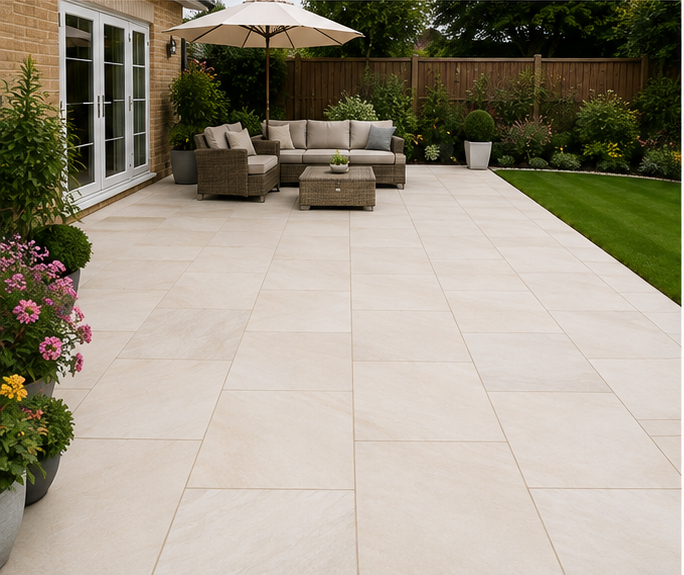
Even though the slabs themselves don't need sealing, the joints between them can still benefit from attention, and the surface will still collect dirt, algae and organic debris over time, especially on shaded or north-facing patios common in many Leominster gardens. A regular sweep, an occasional wash with a mild detergent and warm water, and a jet wash once or twice a year is usually enough to keep porcelain looking as good as the day it was laid. Jointing compounds and grout lines do sometimes need topping up over the years, particularly in areas that see a lot of foot traffic or vehicle movement nearby.
Getting the details right at installation
How porcelain is jointed at the time of installation makes a real difference to how little maintenance it needs later. A properly filled, flush joint using a good quality jointing compound resists weed growth and staining far better than a poorly finished one, and it's worth asking your installer what system they use before work begins. Correct falls for drainage also matter, since water sitting on the surface for long periods, even on a non-porous material, can encourage algae growth in shaded corners of a garden.
Get a Free Quote for Porcelain Paving
Every garden is different — the fastest way to get an accurate answer is a quick chat with our team.