
Leominster's mix of black-and-white cottages, Georgian townhouses and rural smallholdings suits a natural, textured material, and Indian sandstone is a popular choice for exactly that reason. Its riven surface and warm, varied tones sit comfortably against old brick, timber framing and mature planting. Here's how to get the most from it in a traditional setting.
Choosing colours that suit period properties
Indian sandstone comes in shades ranging from soft buffs and golds through to greys and heather tones. For a period cottage or farmhouse, buff and autumn-blend mixes tend to work well because they echo the natural stone, brick and render already on the property rather than competing with it. Grey sandstone suits properties with slate roofing or painted render, giving a slightly cooler, more contemporary edge without looking out of place next to older brickwork.
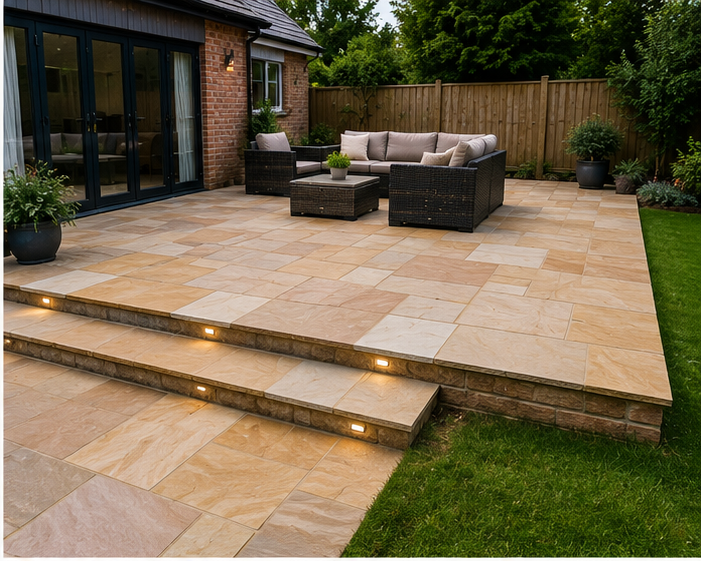
Riven (rather than sawn or honed) sandstone is the more traditional option — its uneven, textured surface catches the light differently across the patio and mimics the reclaimed flagstones you'd find in an older Herefordshire garden. Mixed-size project packs, rather than a single uniform slab size, also help a patio look established and less obviously new.
Practical design touches for country gardens
In rural gardens around Leominster, a sandstone patio often needs to work alongside gravel paths, lawns and planting beds rather than as an isolated square of paving. Softening the edges with low planting, or running a narrow gravel or brick border between lawn and stone, helps the patio feel like part of the garden rather than bolted on. Leaving planting gaps or a soft border along one edge also gives climbers and low shrubs somewhere to spill over onto the stone, which suits a cottage-garden look particularly well.
A random or coursed laying pattern, using two or three slab sizes rather than a single uniform module, tends to suit country gardens better than a rigid grid pattern, which can look quite formal and out of place next to informal planting. Reclaimed-effect or tumbled-edge sandstone is another option worth considering if you want a patio that looks like it's been there for years rather than freshly installed, particularly around older farmhouses or barn conversions on the outskirts of Leominster.
Get a Free Quote for Indian Sandstone Paving
Every garden is different — the fastest way to get an accurate answer is a quick chat with our team.