
Many properties around Leominster sit on larger rural plots, where paths do more than just connect the back door to the garden — they handle mud, wheelbarrows, muddy boots and sometimes livestock traffic nearby. Choosing the right paving for a path is a bit different from choosing for a patio, and it's worth thinking through before deciding.
What a rural path actually needs to cope with
Paths on rural properties typically see heavier, muddier foot traffic than a patio, along with wheelbarrows, garden equipment and sometimes vehicle overrun at the edges. A textured, slip-resistant riven surface is usually more practical here than a smooth, polished finish, since it copes better with mud, wet leaves and general grit being tracked across it. Durability matters more than on a patio too — paths often run the full length of a garden, so a hard-wearing material like granite or a robust sandstone tends to perform better over the years than a more delicate or highly finished stone.
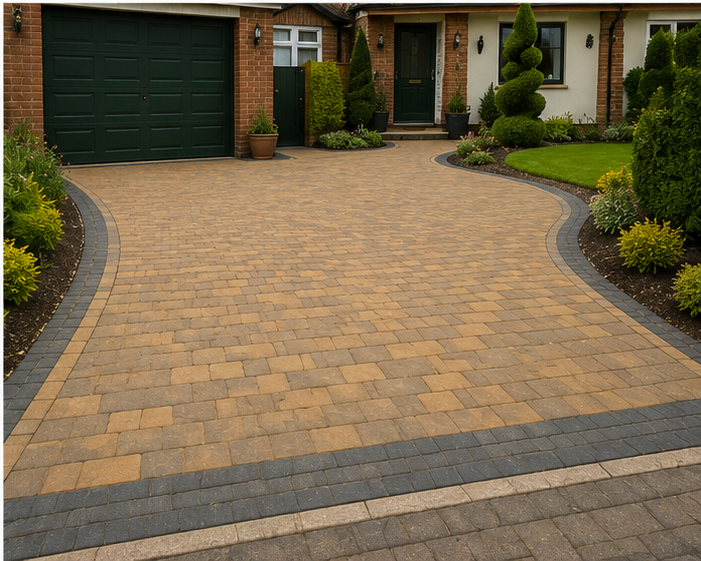
Block paving is also worth considering for longer, working paths, particularly around outbuildings, sheds or workshop areas, because it copes well with repeated wear and is straightforward to lift and relay if access is ever needed for drainage or utility work underneath. Whichever material is chosen, a solid, well-compacted base underneath the path matters just as much as it does on a patio, since a path that develops dips or unevenness quickly becomes a trip hazard.
Practical design considerations
Width matters more on a rural path than people often expect — a path needs to comfortably fit a wheelbarrow or two people passing, which usually means at least 900mm to 1.2 metres depending on use. Good drainage either side of the path prevents water pooling and undermining the base over time, which is particularly important on properties with clay soil, common across parts of Herefordshire. Edging with a contrasting brick or stone border, or simply a firm grass edge kept well trimmed, helps define the path clearly and stops gravel or planting encroaching onto the walking surface.
Lighting is another practical addition worth considering at the planning stage, particularly on longer paths connecting a house to a driveway, gate or outbuilding. Low-level bollard lights or discreet fittings recessed into edging can make a real difference to safety and usability once the evenings draw in, and it's far easier to run cabling before a path is laid than to add it afterwards.
Get a Free Quote for Patio Paving
Every garden is different — the fastest way to get an accurate answer is a quick chat with our team.