
Every natural stone patio needs some upkeep, but the amount varies a lot between materials, and it's a question we get asked constantly by Bromsgrove homeowners who want something attractive without a lot of ongoing work. Understanding porosity and density is the key to picking a low-maintenance stone.
Density and porosity are what matter
Granite is generally the lowest maintenance natural stone because it's extremely dense and has very low porosity, so it resists staining, algae growth and frost damage without needing regular sealing. Limestone and sandstone sit in the middle — both are attractive and durable, but their higher porosity means they benefit from sealing every few years and are more prone to staining from spilled food, oil or fallen leaves left to sit.
Slate can also perform well with minimal upkeep once sealed, though its layered structure means it can be prone to flaking or delamination over time if a poor quality batch is used, so sourcing from a reliable supplier matters as much as the stone type itself.
Practical steps that reduce maintenance regardless of material
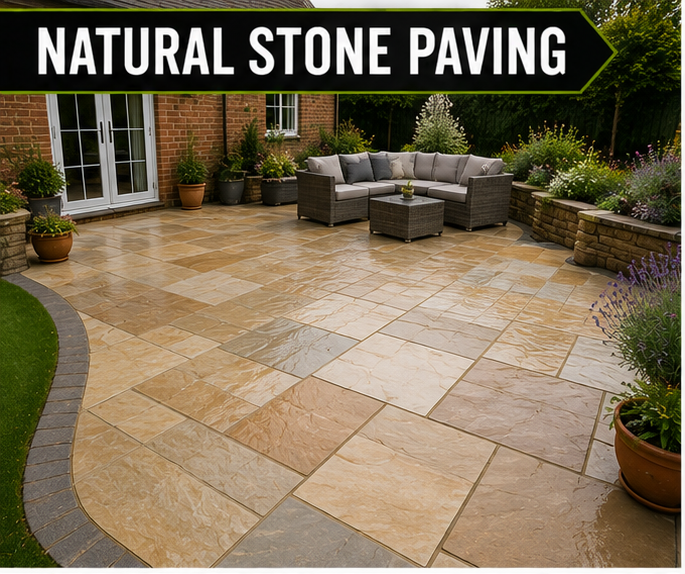
Whatever stone you choose, good drainage falls and quality jointing mortar do more to reduce long-term maintenance than the stone itself. A patio that holds standing water or has porous, poorly compacted joints will develop algae and weeds far faster than one built with proper falls and modern polymeric or resin jointing, regardless of whether it's granite, limestone or sandstone.
A quick seasonal routine helps whatever you choose
Even the lowest maintenance stone benefits from a simple routine — clearing leaves and debris before they break down and stain the surface, brushing off moss before it establishes, and giving the patio a gentle wash rather than an aggressive pressure clean that can strip jointing or roughen the stone's surface over time. Doing this a couple of times a year, particularly going into autumn and again in spring, prevents the build-up that turns a five-minute job into a full deep clean, and it's a habit that pays off regardless of which natural stone ends up in your Bromsgrove garden. It's also worth checking joints annually for early signs of cracking or plant growth, since catching a small problem early is far less disruptive than dealing with a patio that's shifted or spread over several seasons of neglect.
Get a Free Quote for Natural Stone Paving
Every garden is different — the fastest way to get an accurate answer is a quick chat with our team.