
Limestone and porcelain are two of the most requested patio materials among Bromsgrove homeowners at the moment, and they can look surprisingly similar in photos, but they behave very differently once laid. Choosing between them usually comes down to look, maintenance tolerance and budget.
How they compare in practice
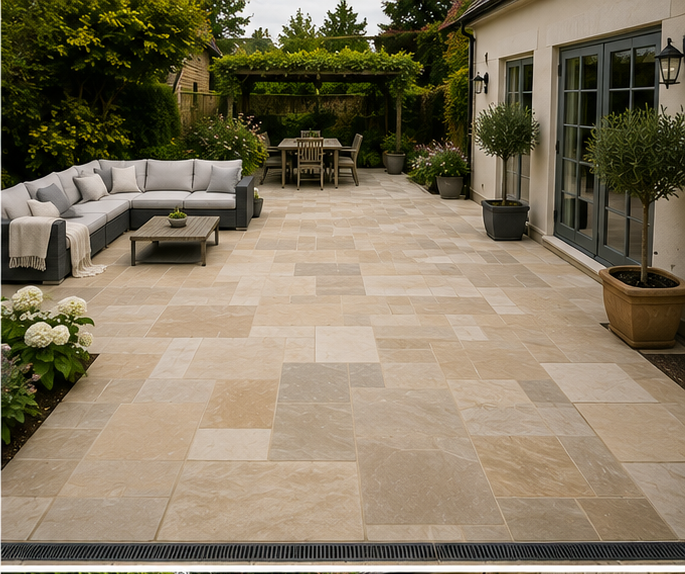
Limestone is a natural stone, so it has subtle colour variation, a slightly softer, warmer look, and genuine texture that some homeowners feel porcelain can't quite replicate even in its best stone-effect ranges. It's also a good conductor of coolness underfoot in summer, which some people prefer around pools or seating areas. The trade-off is that limestone is porous and needs sealing periodically, and it can be more prone to weathering and staining over time than porcelain.
Porcelain, by contrast, is manufactured to be extremely consistent, dense and low maintenance, resisting stains, frost and fading without sealing. It costs more upfront in a lot of cases, though the gap has narrowed as porcelain has become more mainstream, and it suits a more uniform, contemporary look rather than the organic variation of natural stone.
Making the decision for your garden
If your home is period or traditional in style, or you want a patio with natural character, limestone is often the better visual fit. If you want the lowest possible maintenance and a crisp, modern finish that matches a newer extension, porcelain usually wins. It's also worth seeing both materials in daylight at your own property before deciding, since colours can read very differently outdoors than they do on a showroom sample board.
A middle ground worth knowing about
Some homeowners end up combining the two, using limestone or another natural stone in a garden area and porcelain closer to the house where spillages, foot traffic and low maintenance matter most. This isn't right for every design, but it's a practical way to get the character of natural stone further from the building while keeping the highest-use area easy to look after. Whichever route you take, having both laid by the same installer keeps levels, jointing and detailing consistent where the two materials meet, which matters more than people expect when two different slab thicknesses and finishes butt up against each other.
Get a Free Quote for Limestone Paving
Every garden is different — the fastest way to get an accurate answer is a quick chat with our team.