
One of the first practical questions Kidderminster homeowners ask once they've decided on a new patio is simply how long the work will take. It's a fair question, and while every job differs, there's a fairly consistent process behind most patio installations that shapes the timeline.
What happens during installation
A typical patio installation starts with excavation to the correct depth, removing turf, soil or old paving as needed, followed by laying and compacting a sub-base of hardcore to give a stable, well-drained foundation. Slabs are then laid onto a mortar bed with attention to falls (a slight slope) so rainwater drains away from the house rather than pooling. Finally, joints are filled — either with mortar, a resin jointing compound, or brushed-in jointing sand depending on the material — and the area is cleaned up before it's ready to use.
For a straightforward domestic patio of a moderate size, this whole process typically takes somewhere between a few days and around a week, though this varies with size, ground conditions, weather and how much cutting or detailing the design requires. Larger or more complex patios with steps, multiple levels or intricate patterns naturally take longer, and it's always worth confirming an estimated timeline as part of the quote rather than assuming.
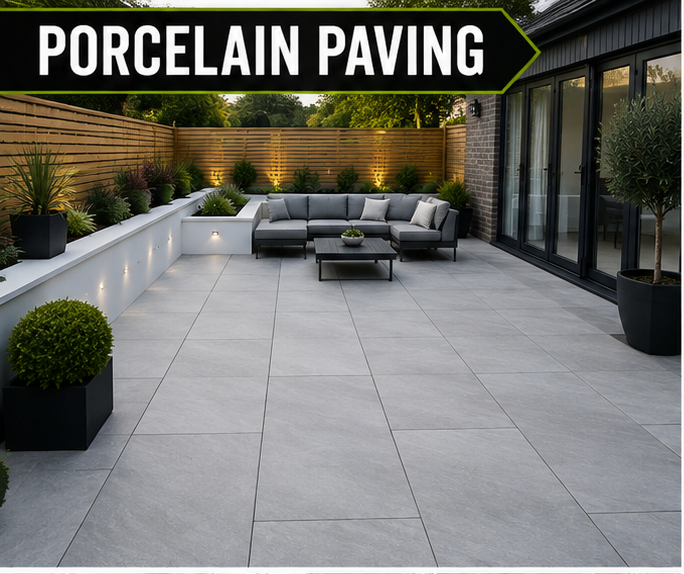
What can extend the timeline
Weather is a genuine factor for outdoor groundwork — heavy or prolonged rain can delay excavation and mortar curing, and very cold snaps can affect how mortar sets. Poor access, unexpected ground conditions like old foundations or high water tables, and awkward garden shapes requiring a lot of cutting can also add days to the schedule. A reliable contractor should give a realistic estimate at quote stage and flag any factors specific to your garden that might affect timing.
Material choice can also play a role — porcelain, for instance, often needs slightly more precise levelling and can take longer to cut cleanly than riven sandstone, while a straightforward rectangular patio in a single material will always be quicker than a design with multiple stones, curves or steps. None of this should come as a surprise if the quote and plan have been discussed properly beforehand.
Get a Free Quote for Patio Paving
Every garden is different — the fastest way to get an accurate answer is a quick chat with our team.