
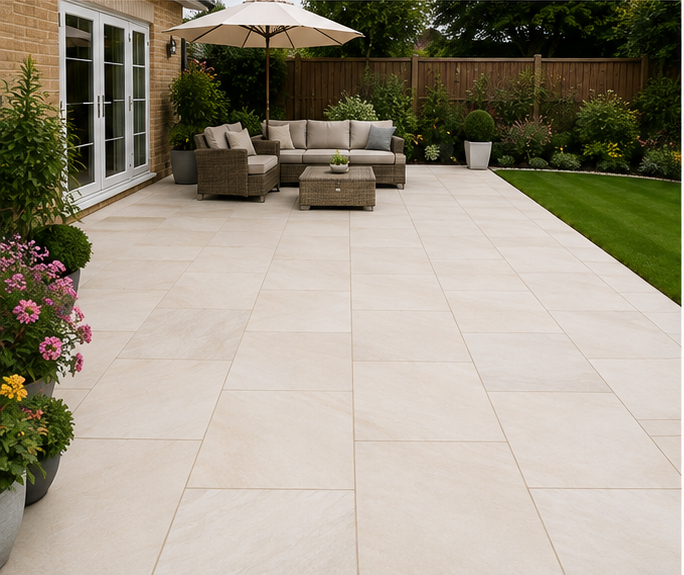
Porcelain has become a genuine alternative to natural stone for patios in Kidderminster, especially for homeowners who want a low-maintenance surface that stays looking sharp year after year. It isn't the right fit for every garden though, so it's worth understanding the trade-offs before choosing it over sandstone or concrete options.
Where porcelain earns its keep
Porcelain is manufactured rather than quarried, which means it's extremely dense and virtually non-porous. That makes it highly resistant to staining, frost damage and algae growth compared with natural stone, so it needs far less scrubbing and reapplying of sealant to keep it looking good. It also comes in very consistent colours and sizes, which suits homeowners after a clean, contemporary look, and many ranges now convincingly mimic natural stone, timber or polished concrete finishes.
It also tends to hold its colour well over time rather than weathering or fading, which is a common complaint with cheaper concrete paving after a few Worcestershire winters. Porcelain's non-slip, textured finishes have also improved considerably in recent years, making it a practical option for pool surrounds, entertaining areas or anywhere else that sees regular foot traffic in wet weather.
Where it falls short
The main downside is cost — quality porcelain typically sits above mid-range Indian sandstone, and it demands a more precise sub-base and laying technique, since the slabs are less forgiving of small movements in the ground beneath them. It's also less tolerant of poor workmanship; any inconsistency in the base tends to show up as lippage (uneven slab edges) more visibly than with riven natural stone. For that reason, it's worth making sure whoever lays it has specific experience with porcelain, not just general paving.
Porcelain slabs are also heavier and more brittle to handle than most people expect, so breakages and chipped edges during transport or cutting can add wastage to a job if the contractor isn't experienced with the material. It's worth asking how they cut around drain covers, steps or curved borders, since porcelain typically needs diamond-tipped blades and more careful handling than softer natural stone. Repairs can also be trickier than with natural stone, since an exact colour match for a single damaged slab isn't always guaranteed if the original batch or range is later discontinued.
Get a Free Quote for Porcelain Paving
Every garden is different — the fastest way to get an accurate answer is a quick chat with our team.