
Porcelain and natural stone are the two materials most people in Tewkesbury end up choosing between when planning a new patio. Both look good and both last, but they behave differently once they're down, and the right one depends on the style of garden and how much upkeep you want to do. SPR Paving lays both regularly, so here's how they actually compare.
Durability and Maintenance
Porcelain is manufactured and fired at high temperature, which makes it very dense and non-porous. It resists staining, doesn't easily grow algae, and rarely needs sealing. Natural stone such as sandstone or limestone is porous, so it will take on dirt and moisture more readily and generally benefits from sealing to keep it looking clean. In exchange, natural stone develops a genuine patina over the years that many people prefer to the more static appearance of porcelain.
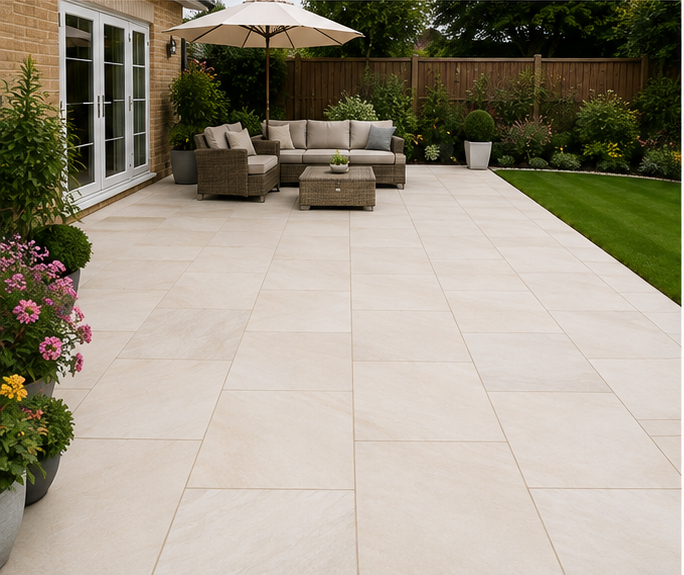
Which Suits a Tewkesbury Garden
Older cottage gardens and properties near the river tend to suit natural stone, where the variation in tone and texture feels in keeping with an established plot. Newer builds and modern extensions often suit porcelain's cleaner, more consistent finish. Weather is worth factoring in too - Gloucestershire winters are wet, and Tewkesbury's low-lying position near the Severn and Avon means gardens can stay damp for long spells. Textured, slip-rated porcelain copes well with this with minimal maintenance, while natural stone needs a bit more regular attention to stop algae building up in shaded, damp corners.
Get a Free Quote for Porcelain Paving
Every garden is different — the fastest way to get an accurate answer is a quick chat with our team.