
Porcelain paving has become a common request from Redditch homeowners wanting a modern, low-maintenance patio, but it isn't automatically the better choice for every garden. It depends on what you want day to day, how much upkeep you're willing to do, and what look you're after. Both materials do the job well; the differences show up more in the small details.
Where Porcelain Genuinely Wins
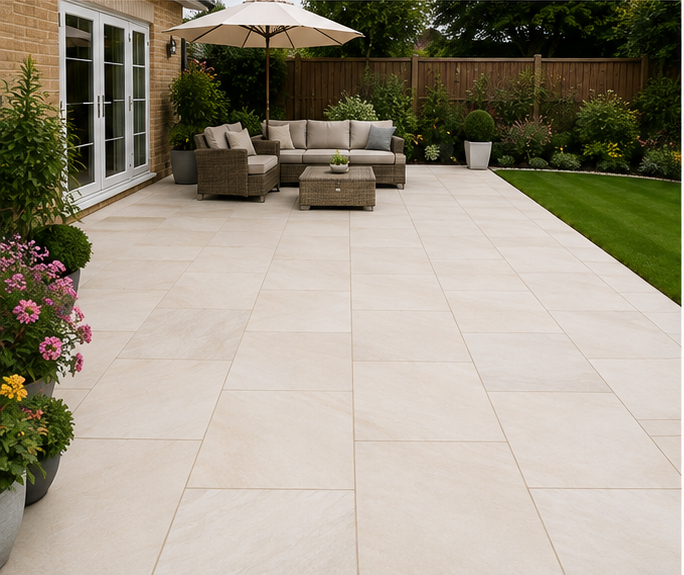
Porcelain is manufactured to be extremely dense and low-porosity, which means it barely absorbs water or dirt. That translates into far less algae growth than natural stone, fewer stubborn stains from garden furniture, spilled food or leaf tannins, and a surface that keeps its colour rather than weathering or bleaching in sunlight. For a family garden that gets used hard, especially one near play areas or a barbecue spot, that practical durability is a real advantage over time, not just a marketing point.
It also comes in very consistent sizes and thicknesses, which makes for tighter, neater joints than you typically get with natural stone. If you want a crisp, contemporary finish that stays looking sharp with minimal effort, porcelain does that reliably well.
Where Traditional Slabs Still Make Sense
Natural stone like Indian sandstone has a variation in colour and texture that porcelain, however good the printing technology, doesn't fully replicate. If you're after a traditional cottage-garden look, or you're extending a patio that already has natural stone laid, matching or complementing it with more stone usually looks better than introducing porcelain. Porcelain also tends to cost more per square metre and can be less forgiving to cut on site for awkward shapes, so for smaller budgets or irregular garden layouts, traditional paving sometimes remains the simpler, more cost-effective option.
There's also the installation side to think about. Porcelain needs a very accurate, consistent sub-base and bedding layer because the slabs are rigid and don't flex or bed in the way natural stone can, so any unevenness in the ground shows up more readily as lippage between slabs. That means the groundwork has to be done to a tighter tolerance, which is one reason it's worth choosing a contractor who's laid porcelain regularly rather than someone used mainly to traditional stone.
Get a Free Quote for Porcelain Paving
Every garden is different — the fastest way to get an accurate answer is a quick chat with our team.