
A garden path might seem like a smaller job than a full patio, but the cost can still vary a great deal depending on length, width and what's underneath the existing route. Worcester gardens often have paths linking a side gate to the back door or running down to a shed, and each layout brings its own challenges. Here's what to think about before asking for a quote.
Length, Width and Ground Conditions
Cost generally scales with area, so a long, narrow path uses less material and less excavation than a wide one, but very narrow paths can be trickier to work efficiently, especially if there's no room for a machine and everything has to be dug and barrowed by hand. Ground conditions matter just as much as on a patio: heavy clay soil, tree roots crossing the route, or a path that needs to be raised above a damp lawn all add time and materials.
Existing edging, steps or level changes along the path also affect price. A path that needs a retaining edge to hold back a border, or steps to manage a change in level, will cost more than a flat, straightforward run between two points, simply because there's more skilled work involved in getting those details right and durable.
Lighting and drainage are worth considering at the same time as the path itself, even if they add a little to the initial cost. Running a cable duct beneath the path during construction, for later low-level lighting, is far cheaper than digging up a finished path to add it afterwards, and a simple fall built into the path's construction will stop water pooling and freezing across a well-used route in winter.
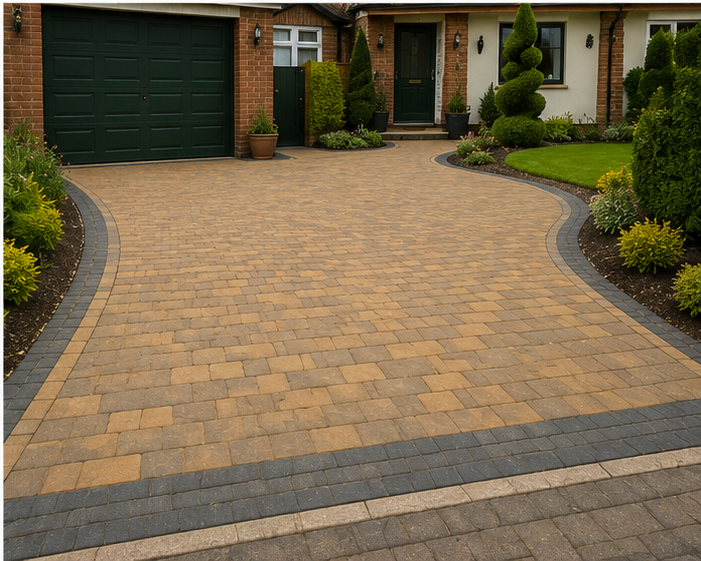
Material Choice for Paths
Gravel or resin-bound paths tend to be the most budget-friendly option, block paving and concrete flags sit in the middle, and natural stone such as sandstone or granite costs more but gives a more finished, cohesive look if it matches an existing patio. For a path that gets daily foot traffic, it's worth prioritising a durable, slip-resistant surface over the cheapest option, since a path that becomes slippery or uneven within a few years often ends up costing more to fix than it saved initially.
Get a Free Quote for Patio Paving
Every garden is different — the fastest way to get an accurate answer is a quick chat with our team.